

At a rural clinic in Idaho, one clinician first saw a Freed ad on social media and tried the product himself. The clinic’s management was concerned about patient data and compliance. After reviewing the material and consulting a lawyer, it approved a one-month trial for that clinician alone. A month later, four providers in the same office were using Freed. This account comes from a customer story published by Freed and cannot represent every clinic. It does, however, make the company’s sales path unusually concrete: one person first has to open the product in an exam room before the clinic will seriously consider wider adoption.
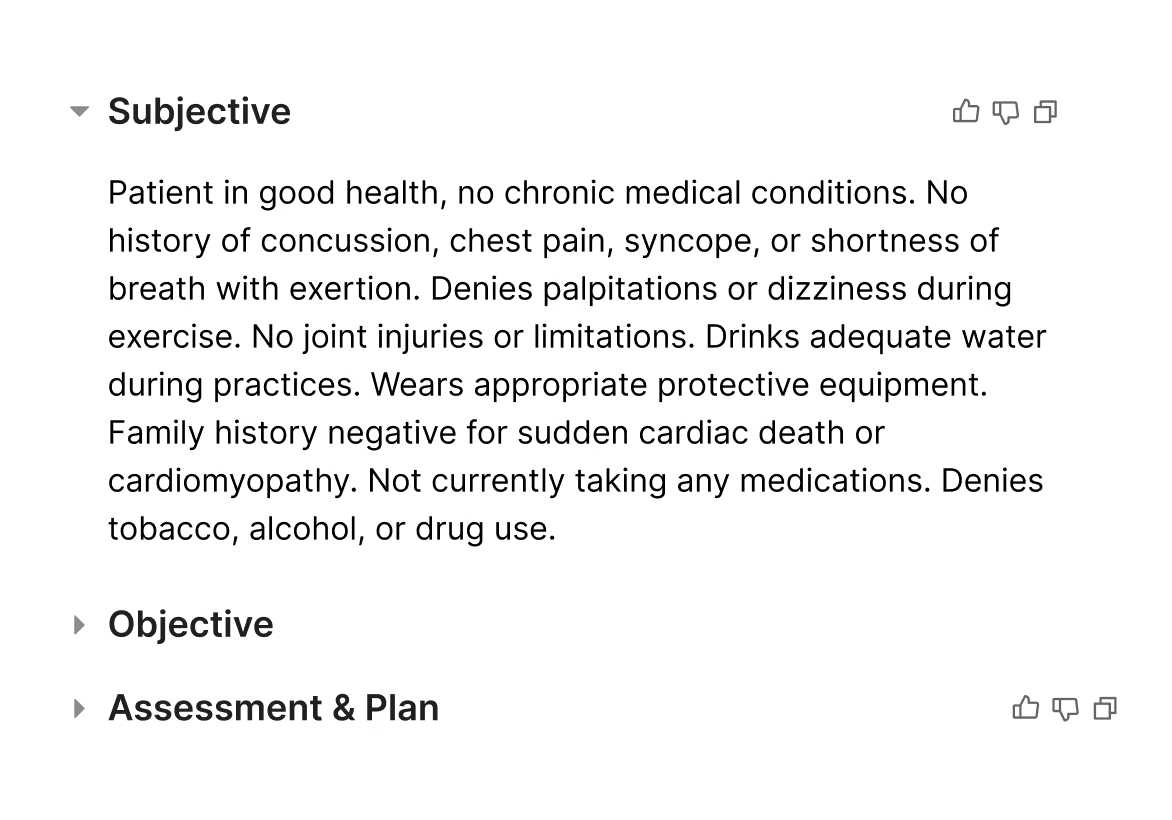
Freed is an AI clinical scribe. It listens to the conversation between a clinician and a patient and turns it into a clinical note that can be reviewed and edited. The clinician does not hand signing authority to the software. The note still has to be checked by the clinician before it enters the existing electronic health record. That apparently simple division of responsibility helps explain why Freed can start with an individual trial instead of waiting for a hospital to replace an information system.
Why Clinicians Seek It Out Themselves
The first provider in the Idaho trial was Blake Thompson, a nurse practitioner at a rural family clinic. His old workflow began with rough notes during a visit. Back at his desk, he dictated into Dragon, moved the content into eClinicalWorks section by section, corrected errors, and signed the record. According to Thompson, the work took another eight to twelve minutes after each patient, and he saw sixteen to twenty-four patients a day. Documentation had become a second shift after the clinic day.
The social ad explains how he discovered Freed, but it does not explain why the clinic accepted a trial. The more important detail was that Freed did not require a deep electronic health record integration before it could be tested. Thompson could keep Freed and the existing system open on his laptop, start recording when he entered the exam room, review the generated note afterward, and move the content into the system the clinic already used. The clinic could evaluate one clinician’s use without changing the workflow for everyone at once.
Easy to start did not mean free of approval. Thompson’s clinic reviewed the compliance material and asked a lawyer to assess it. For a healthcare product, an individual trial reduces the scope of deployment and the size of the decision. It does not make patient-data obligations or clinical responsibility disappear simply because one clinician is paying for a subscription.
Freed currently gives new users a seven-day trial without requiring payment details up front. The trial includes much of the advanced product. That arrangement lets a clinician evaluate Freed with their own patients, specialty templates, and electronic health record rather than relying on a sales demonstration.
Every step in the customer story has a named actor and an observable action: an ad led to a trial, and colleagues later saw the result. Freed has not disclosed how much it spent on those ads or what percentage of trials became paid subscriptions. One clinic’s experience cannot be treated as a proven company-wide conversion rate.
Sell The Individual Subscription, Then Meet Team Needs
Freed’s pricing has changed. In a 2025 interview, VentureBeat recorded a $90 monthly individual plan and per-seat pricing for small teams, while Sacra observed an entry point of roughly $99 per month. Those are historical prices. The current official pricing page lists three individual tiers: Starter at $39 per month for up to forty notes, Core at $79 per month for unlimited notes, and Premier at $119 per month with pre-visit summaries, patient letters, coding suggestions, and supported electronic health record push. Team pricing is quoted separately.
Those thresholds are not arbitrary. A low-frequency user can begin with a limited note allowance. A busy clinician will run into the cap. A user who wants notes to move more smoothly into the electronic health record, or who needs coding and post-visit documents, has a reason to upgrade. The tiers separate two buying decisions: whether the product can write a useful note and whether the broader workflow is worth paying for over time. This interpretation describes the pricing design; Freed has not published conversion rates between tiers.
The product also gives a clinician a reason to recruit the next user. Freed’s help center says paid subscribers can share a personal referral link. After the new user completes the first full paid month, both the referrer and the referred user receive a one-month subscription credit. The reward does not arrive at registration. It encourages another clinician to complete the trial and make at least one real payment.
Thompson’s example suggests clinician-to-clinician distribution does not always need to begin with a sales representative. He later introduced Freed to a nearby psychiatric nurse practitioner clinic and an orthopedic clinic. The vendor’s story does not say whether those introductions converted through referral links or how many seats Thompson’s clinic eventually purchased. It establishes that use spread, not that every new user became a paying subscriber.
After Four Users, Who Buys More Seats?
Once the product moves from one person to a clinic, the buyer’s concerns change. A clinician cares whether the note is easy to edit and whether documentation ends sooner. An administrator also has to manage accounts, bills, single sign-on, shared resources, and training. Freed’s team plan gives groups of at least two clinicians consolidated billing, administrative controls, clinic training, a dedicated customer manager, and a business associate agreement for the organization. None of those features is visually dramatic. They are simply the tasks someone must own after the fourth user arrives.
The same path appears at a larger customer. Camarena Health, a California healthcare organization, wrote in its own 2024 annual report that Freed expanded from a three-provider pilot to more than forty-three providers, over half of its clinical team at the time. A customer-published annual report is stronger evidence of routine adoption than a success story written only by the vendor.
A later Camarena story published by Freed said more than fifty providers were using the product across twenty-four sites. A leader said the organization initially bought a small number of licenses and added more each month as adoption grew. The article also said Freed handled 96,067 visits for Camarena in 2025. The license expansion and visit count come from a vendor-published customer story and have not been independently audited. The annual report independently confirms the earlier expansion from three users to more than forty-three.
Camarena had previously hired human scribes, and turnover forced it to repeat training. It evaluated other choices, including a tool built into its existing electronic health record, and eventually pushed Freed’s notes back into that original system. This is a different buying situation from Thompson testing a browser product by himself. Camarena had to manage costs and operations across many sites; Thompson first had to prove that one workday could change. Freed used the same note-writing entry point to address two levels of purchasing.
In May 2025, Sacra estimated that Freed had reached about $19 million in annual recurring revenue as of March, up from its estimate of $8 million a year earlier. In July 2025, Freed’s CEO told VentureBeat the company had twenty thousand paying clinicians. Sacra’s revenue estimate and the company-reported paid-clinician count use different definitions and dates, so they should not be multiplied to infer average revenue per customer. Together they show that the individual entry point supports a business that collects real payments.
When The Basic Scribe Is Free, What Still Earns A Subscription?
In July 2025, clinician network Doximity launched a free AI scribe. Its current page also offers specialty templates, customizable formats, encounter recording, and note delivery. That gives Freed a harder problem: when turning a conversation into a clinical note is available at no charge, why should a clinician keep paying?
Freed’s answer is visible in its product tiers. A clinician can pay for unlimited notes, personalized templates, pre-visit summaries, coding suggestions, and workflows that send notes into an existing electronic health record; a clinic can pay for account administration, sharing, and training. These are the capabilities Freed currently sells. They do not prove that the company has defeated a free competitor or that users will necessarily renew.
Thompson’s use shows why product quality is harder to compare than a feature checklist. During an encounter, he speaks physical-exam observations aloud so Freed can include them. After the note is generated, he still reviews it, adjusts the format, and moves it into the original system. He says this saves about an hour and a half to two hours each day. That is an individual’s account, not an independently timed study. For a user like Thompson, a free tool has to replace an entire familiar note-writing routine, not one isolated feature.
Freed is also moving into other clinic expense categories. In 2026 it launched a front-desk phone assistant. The public starting price is $149 per month for 250 incoming calls; it answers calls, organizes requests, and hands follow-up work to staff. That is a separate clinic-operations budget. No public evidence shows what percentage of scribe customers will also buy the front-desk product.
The important part of this business is how the purchasing decision changes over time. One clinician validates the product using their own notes. After adoption spreads, an administrator buys seats and management capabilities. Freed then tries to move the same customer into the clinic’s front office. Free competitors make the first step cheaper, while forcing Freed to produce more convincing results in the next two.