
In January 2025, an Australian user left Glam Up a negative App Store review. She had uploaded a selfie and was waiting for the AI makeup analysis. Instead, the app presented another choice: pay, or invite three friends. The iPhone app had promised to help people find the right makeup look, but at the moment when the user most wanted the answer, it asked her to bring in the next users first. That review is still visible on the App Store.
That complaint points directly at the most interesting part of Glam Up’s early growth: the app placed acquisition before the reveal.
Co-founder Nicole Cheung later wrote about the company in her undergraduate thesis. The public abstract says that from May to November 2024, Glam Up grew to more than 1 million users and $150,000 in monthly recurring revenue; it also names “requiring users to invite friends” as one of the growth methods. Those figures come from the founder’s own account and are not independently audited.
Cheung’s story was covered by Claremont McKenna College in July 2025. The school reported that she majored in psychology and economics and built the million-download app while still a senior. The important product decision sits exactly where user psychology and transaction design meet.
Makeup Tutorials Are Everywhere, But “What Fits My Face?” Is Still Personal
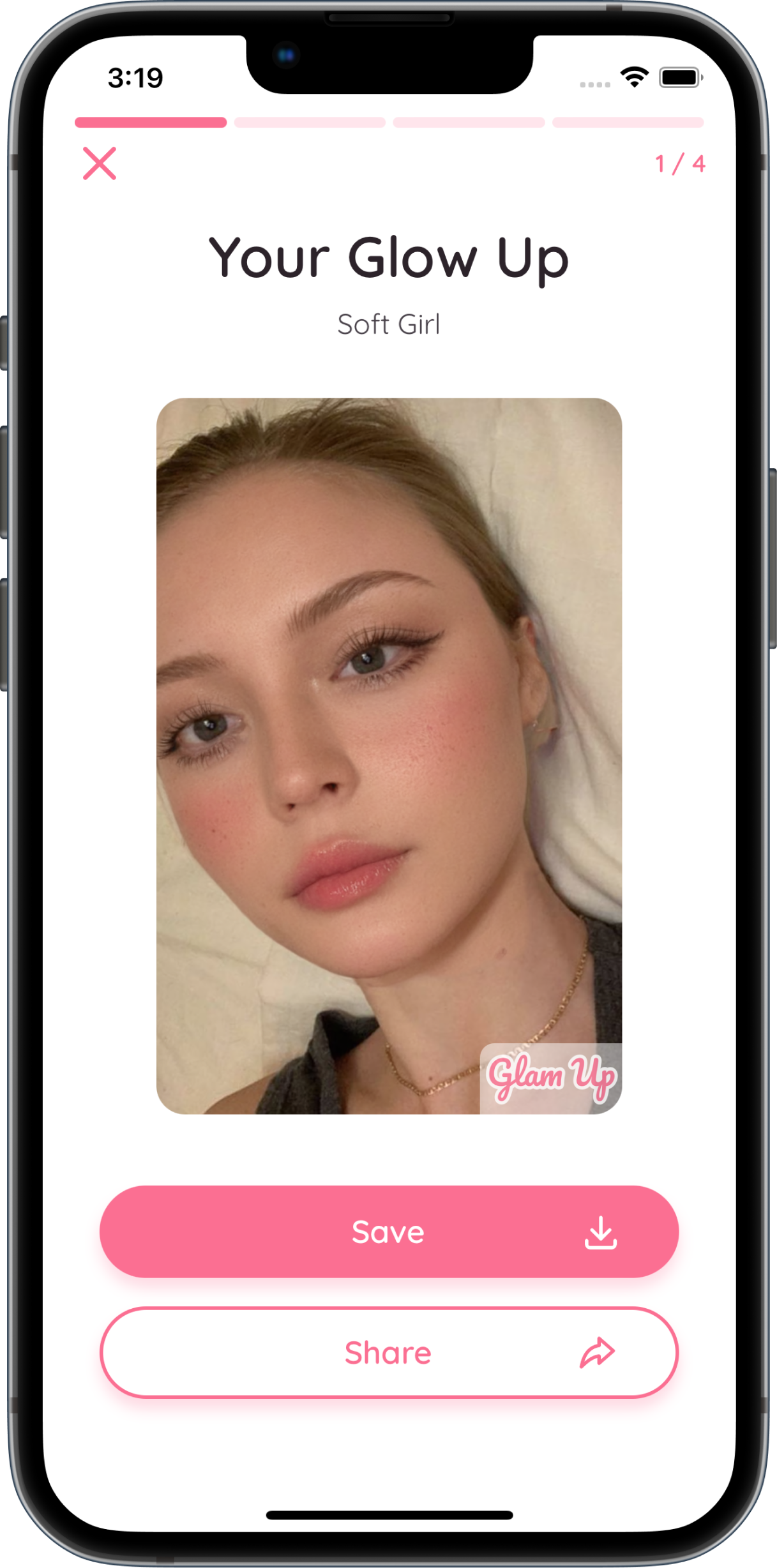
Glam Up’s entry point is almost self-explanatory: take or upload a selfie.
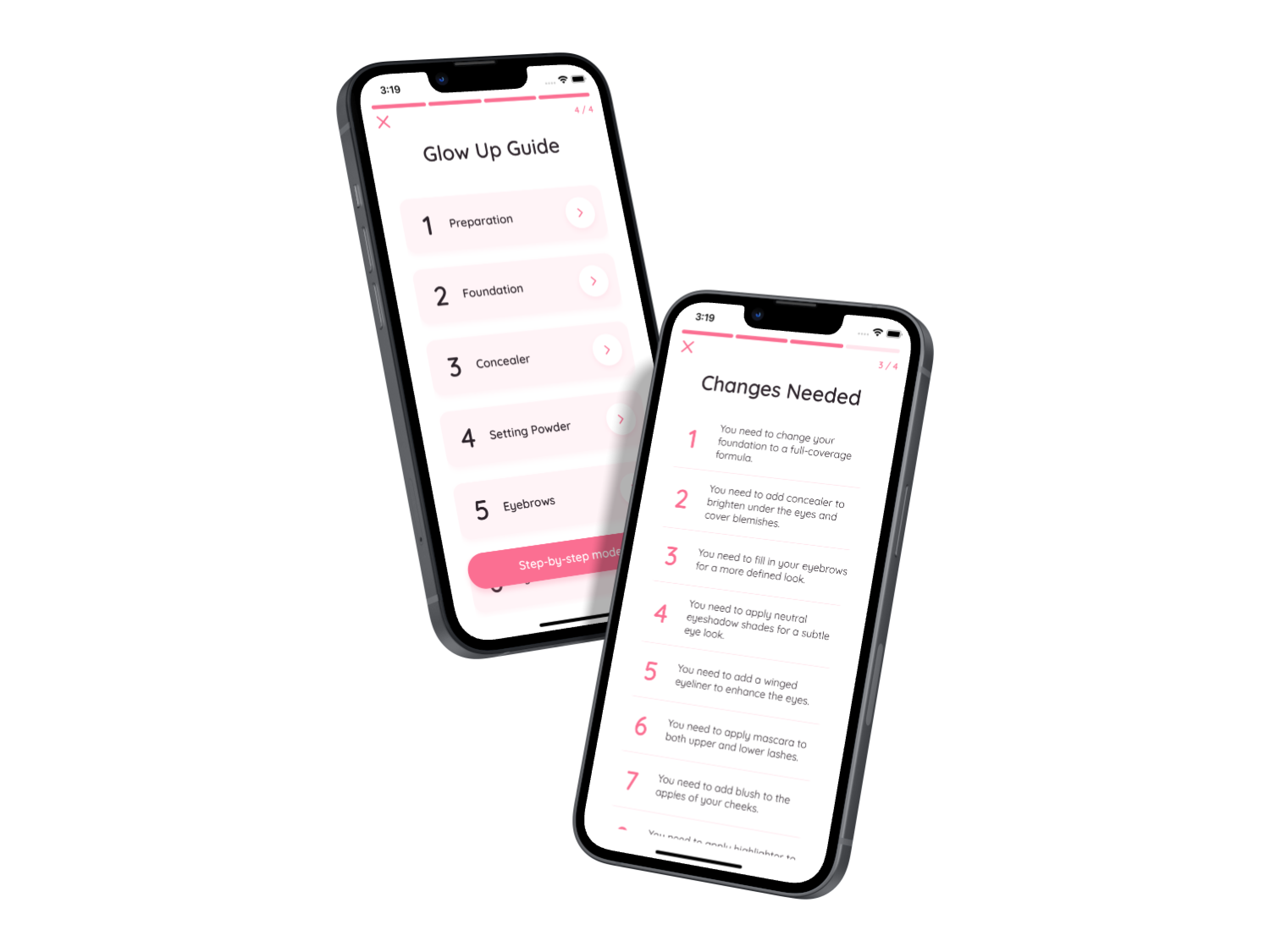
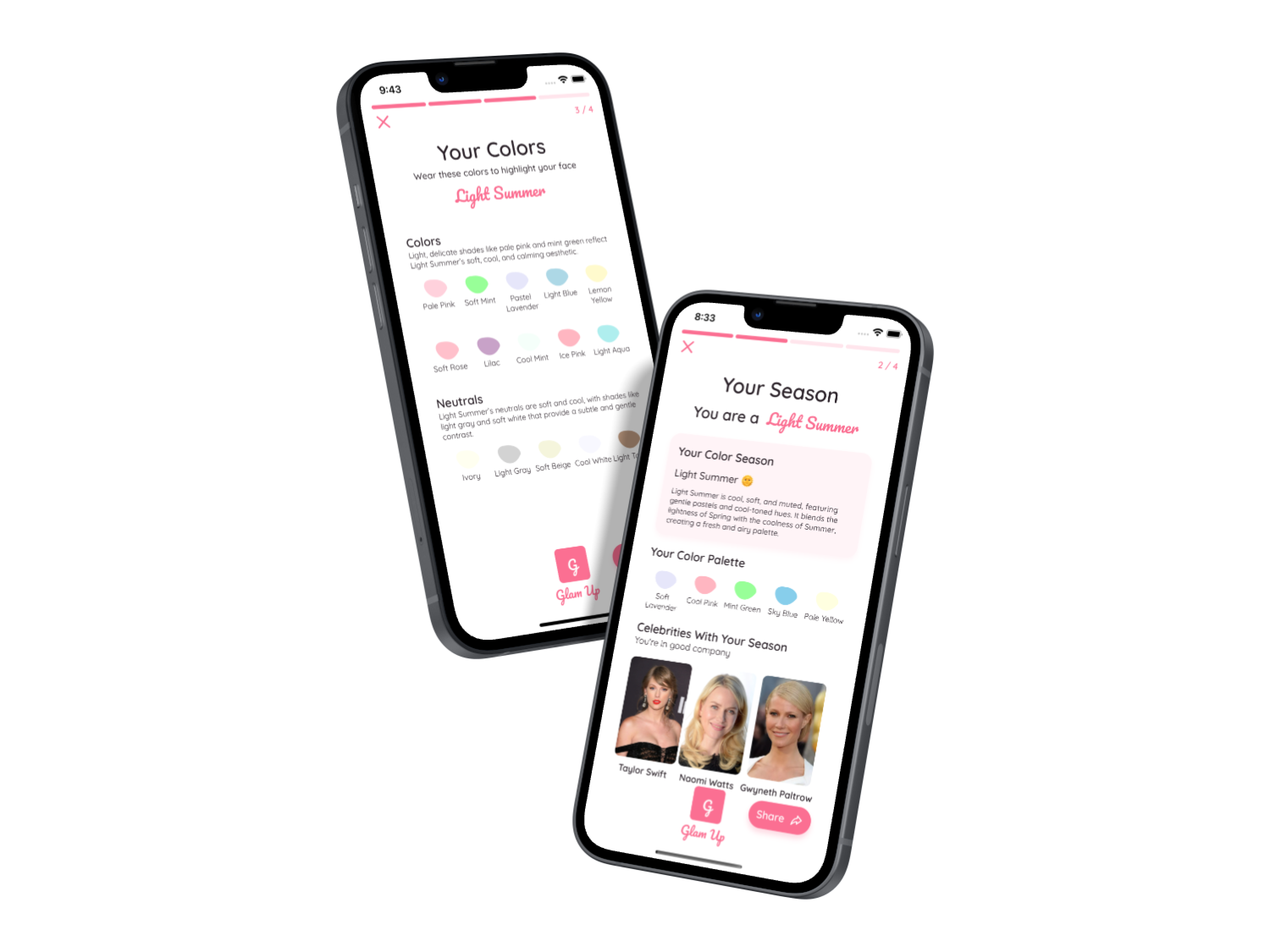
From there, the product lets users choose a style, generates a makeup preview, and gives guidance for recreating the look. The website also shows color analysis and facial feature analysis. Instead of packaging the experience as a chatbot that requires repeated prompting, Glam Up separates the jobs: show me what I could look like, then tell me which colors and techniques fit. The official website presents these features as distinct product modules.
For users, the difference is the word “my.” A makeup tutorial can look beautiful on someone else, but the viewer still has to decide whether the look works on her own face. Once the user uploads a photo, watching a tutorial turns into waiting for an answer about herself.
That also explains why the workflow fits the phone. The selfie is already there. The preview is visual. Sharing does not require leaving the social tools people already use. AI handles image analysis and personalization, while the user avoids learning a new prompt language.
Beauty is a category where the result is easier to show than the underlying method. A social video can display the before-and-after effect, then push the viewer to try her own photo. Product, output, and acquisition material are all talking about the same thing.
At The Moment Of Curiosity, Pay Or Bring Friends
Download intent does not automatically become payment intent.
Glam Up’s early answer was to create another exchange between those two points. If the user did not pay, she could try to unlock the result by inviting friends. The Australian review describes that flow. A Canadian user also complained in October 2024 that she had invited three friends but the system did not count them, so she still could not see the result. That review reflects the user’s reported experience at the time; it should not be treated as a permanent description of every current session.
The design makes one selfie produce two possible business outcomes: someone pays, or someone brings new users. Monetization and acquisition are not placed on separate pages. They are compressed into the same decision.
It also changes when the invitation happens. The user has not yet received the promised result, but she is already being asked to distribute the product. That is different from “try it, love it, recommend it.” This model relies on anticipation. The other model relies on a fulfilled experience.
The negative reviews show the fragility of that bargain. If the referral is not counted, the user feels she has completed the task but has not received what was promised. At that point, the problem is not only wording on a paywall. It is the entire reward delivery process.
Before One Million Users, The Team Tested Dozens Of Paths
The referral gate was not a single clever idea that simply worked on the first try.
In a September 2026 interview with Starter Story, Cheung said the team tested roughly twenty to thirty social media strategies for Glam Up before finding approaches that worked. She described focusing heavily on TikTok and Instagram and repeatedly testing content and distribution.
The practical lesson is what the team chose to test. They were not only asking whether the AI analysis could become more accurate. They were also asking what content made people want to try their own photo, at what point users would pay, and when they would share. The entry point, the result, and the monetization moment were tuned together.
As of the current US App Store page, Glam Up is still listed as free to download with in-app purchases. Its description says analysis requires a subscription, and the page shows roughly 33,000 ratings. The US App Store page provides the current distribution and monetization surface. The distance between getting someone to upload the first selfie and getting them to pay for analysis remains the core business problem.
Glam Up is a very specific kind of consumer AI business. It starts by making the user want to see a result about herself, then turns that anticipation into payment or distribution. The million-user milestone shows that the app caught attention. The referral complaints show the other side of the design: if users bring you their friends before seeing the answer, the promised answer has to arrive.
That makes Glam Up more useful than a generic “AI beauty app” example. The product is not only personalization. It is the sequencing around personalization: selfie, expectation, gated reveal, payment or referral, then another round of social content that brings the next user to the same moment.