

Crustdata recently put a blunt number on its homepage: in 18 months, annual recurring revenue grew from $600,000 to $10 million. The company sells real-time company and people data for AI sales, recruiting, and investment tools. But the more interesting move in that growth was not the API itself. It was the decision to step around the API’s traditional buyer and help customers build the customer-acquisition system they had not yet assembled.
The API Was Only The Starting Point
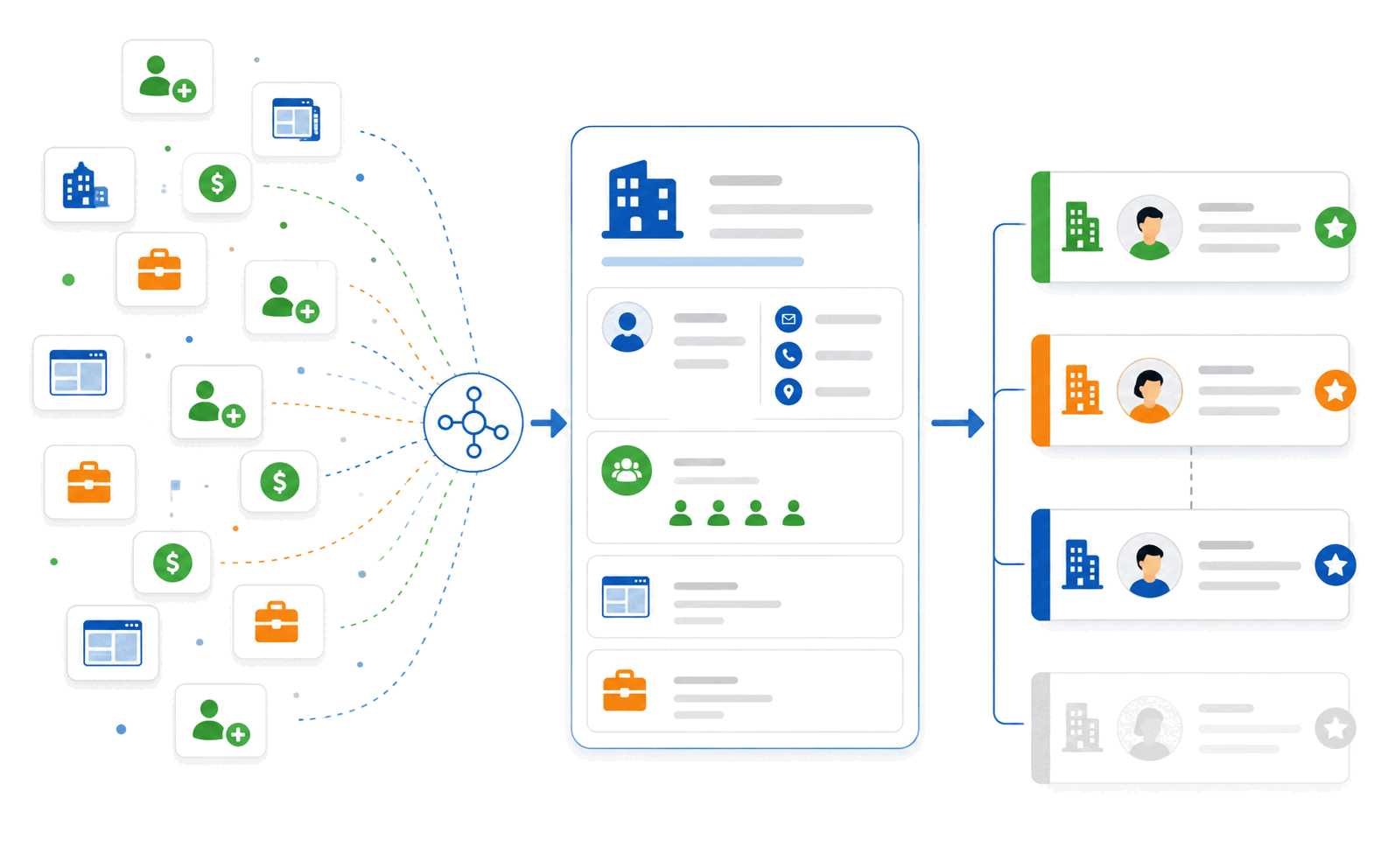
Start with Crustdata’s original position. An AI SDR should not decide whom to contact from a static list alone. A company that just raised funding, a decision maker who changed roles, a team that started hiring, or a new signal on a website can all change whether an email is worth sending.
Crustdata organizes those changes from web pages, professional networks, company data, and public business signals into a data layer that agents can call. Its early customers were often AI sales and AI recruiting products. They took the data, then decided what the next action should be inside their own tools.
That is a clean data business. It is also a business with a familiar ceiling.
Fresher data does not remove the customer’s remaining work. The customer still has to connect models, write rules, define segments, tune messaging, and stitch multiple tools together. In practice, many buyers do not feel they have purchased “real-time data.” They feel they have purchased parts that still need assembly.

Pricing Makes The Data Business Legible
Crustdata’s underlying monetization is still easy to understand. In its official pricing documentation, company and people search costs 0.03 credits per result. People enrichment costs between 1 and 7 credits depending on field depth. Real-time people and company endpoints are tied to plan access or enterprise contracts.
That model gives a small team a low-friction way to test a market or verify a workflow. It can search cheaply, enrich only when needed, and delay a larger contract until real-time coverage, stability, or enterprise access becomes important.
But credits do not fully explain the company’s recent growth.
According to an ARR Club breakdown of co-founder Chris Pisarski’s account, Crustdata found that the bigger deals were not always with ISVs embedding data into their own products. They were with recruiting agencies and founders of Series A and Series B companies. Recruiters needed to identify better candidates. Founders needed a steady way to identify better prospects. Neither group was really asking for “give me an API.” They were asking, implicitly or explicitly, “make this growth workflow run.”
That discovery changes the product surface. A data company can continue optimizing endpoints, freshness, and coverage. Or it can move closer to the buyer’s actual job and package data, configuration, and operating knowledge into a result.
White-Glove Delivery Became Product Discovery
Crustdata began doing something many data companies prefer to avoid: white-glove delivery.
Technical customer engineers were not only brought in after the sale to debug integrations. They joined pre-sales conversations, pulled data live, analyzed target accounts, configured skills, and shaped workflows. In other words, service was not treated only as implementation cost. It became a product-discovery mechanism.
When customers stop at a particular step, when one signal turns out to be more predictive than another, or when an automation cannot run on its own, that learning reaches the product faster than an API usage report can explain it.
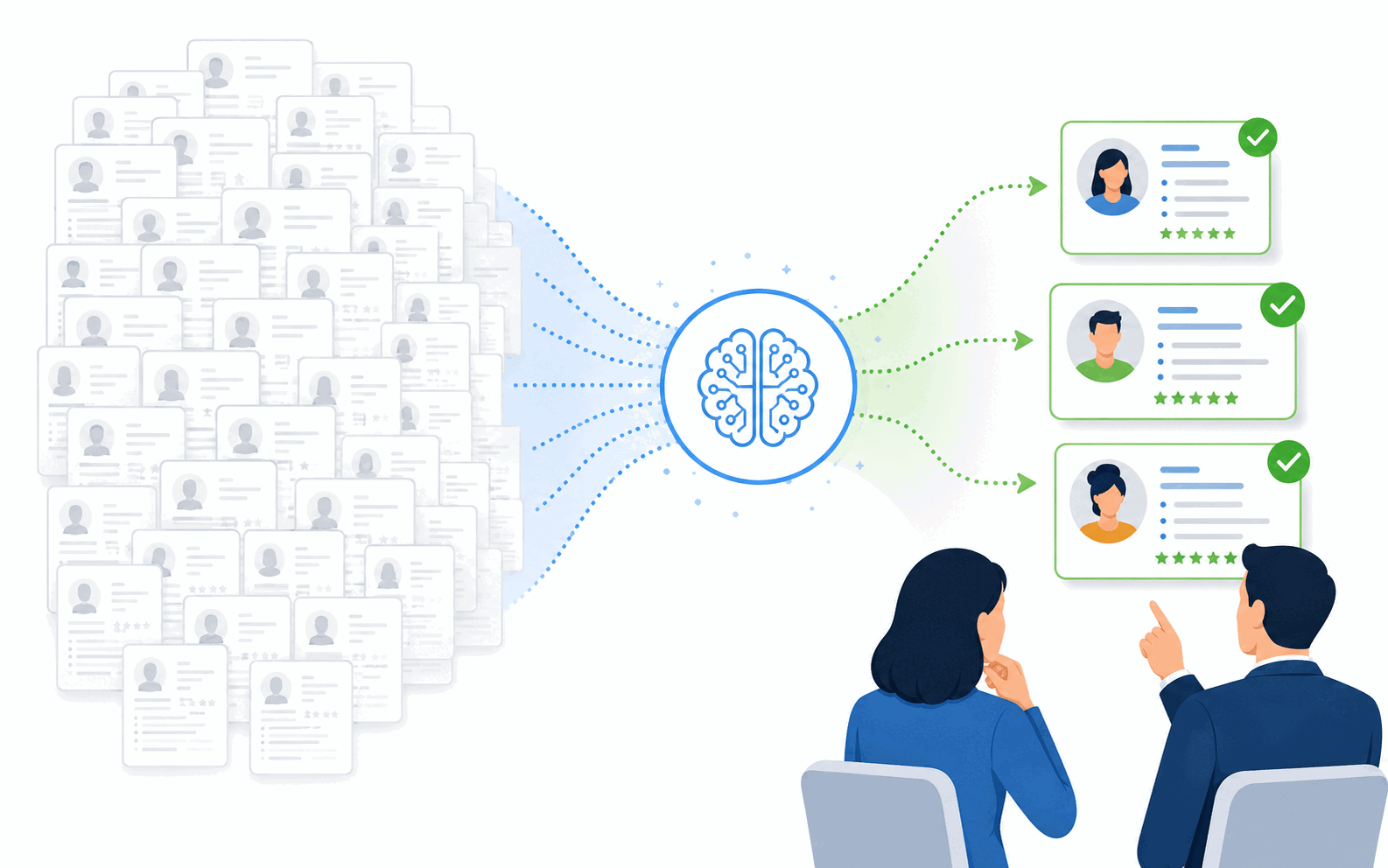
One official customer story makes the shift concrete. The Firm, a two-person recruiting agency, encoded 25 years of judgment into Claude skills and connected that workflow to Crustdata. According to Crustdata’s case-study page, the system can start from more than 700 noisy results and narrow them to 50 to 60 genuinely relevant candidates. The agency’s sourcing capacity increased by 50% without adding recruiters.
That is a vendor-published metric, not an independent audit. It should not be stretched beyond what the source supports. But it does identify what the buyer was willing to pay for. The value was not the size of the database. The value was how much useless work remained after the first pass.
The Better Buyer Was Closer To The Outcome
This also explains why Crustdata did not only chase more agent startups as API customers.
API customers can provide distribution, but they also keep the final customer value inside someone else’s product. Direct GTM delivery lets Crustdata see who approves the budget, where customers are willing to pay more, and how the boundary between data and human work should be drawn.
The self-serve entry point still matters. It preserves a low-friction path for experimentation and developer-led discovery. The higher-value motion sits above it: once a buyer knows the workflow is important enough, the company can sell access, configuration, and enterprise reliability together.
Crustdata’s website-reported $10 million ARR should still be framed carefully. It is company-reported, not audited financial data. It does not prove profit margin, net retention, average contract value, or the long-term scalability of the delivery model.
The white-glove model has its own ceiling. The deeper customer engineers go into each account, the more revenue can start to look like labor. The next thing Crustdata has to prove is not merely that it can find more customers. It has to show that repeated delivery patterns can become software again, so that the learning from service eventually returns to software gross margin.
The Builder Lesson Is Slightly Uncomfortable
For AI founders, the case is useful because it forces an uncomfortable diagnosis.
When customers have a model and fresh data but still cannot get the outcome, adding more product features may not raise willingness to pay. Running the critical workflow for them first may be the fastest way to learn which step deserves to become software.
Crustdata first became useful because other agents could call its data. Then it began using that same data to run customers’ growth work more directly. The data was the entry point. The result became the contract.