
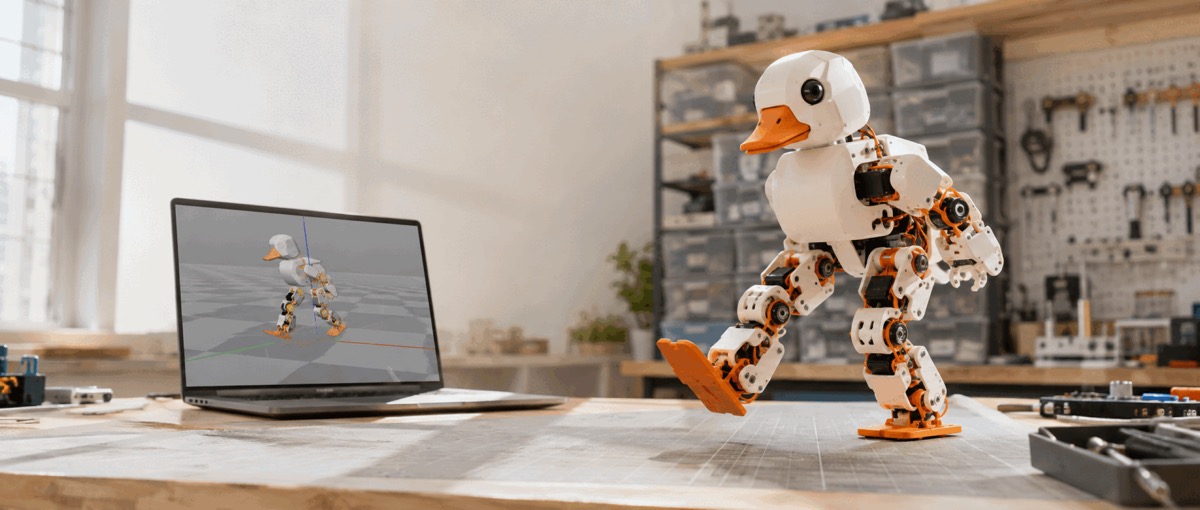
On August 27, Pollen Robotics put a 25-centimeter bipedal robot on preorder. The introductory price was $399, before tax and shipping. It ships with a controller and can walk, sit, kick, carry objects, and stand up again after falling. The product is called Microduck. Its commercial point is not a single cute demonstration. It is a purchasable training terminal for physical AI.
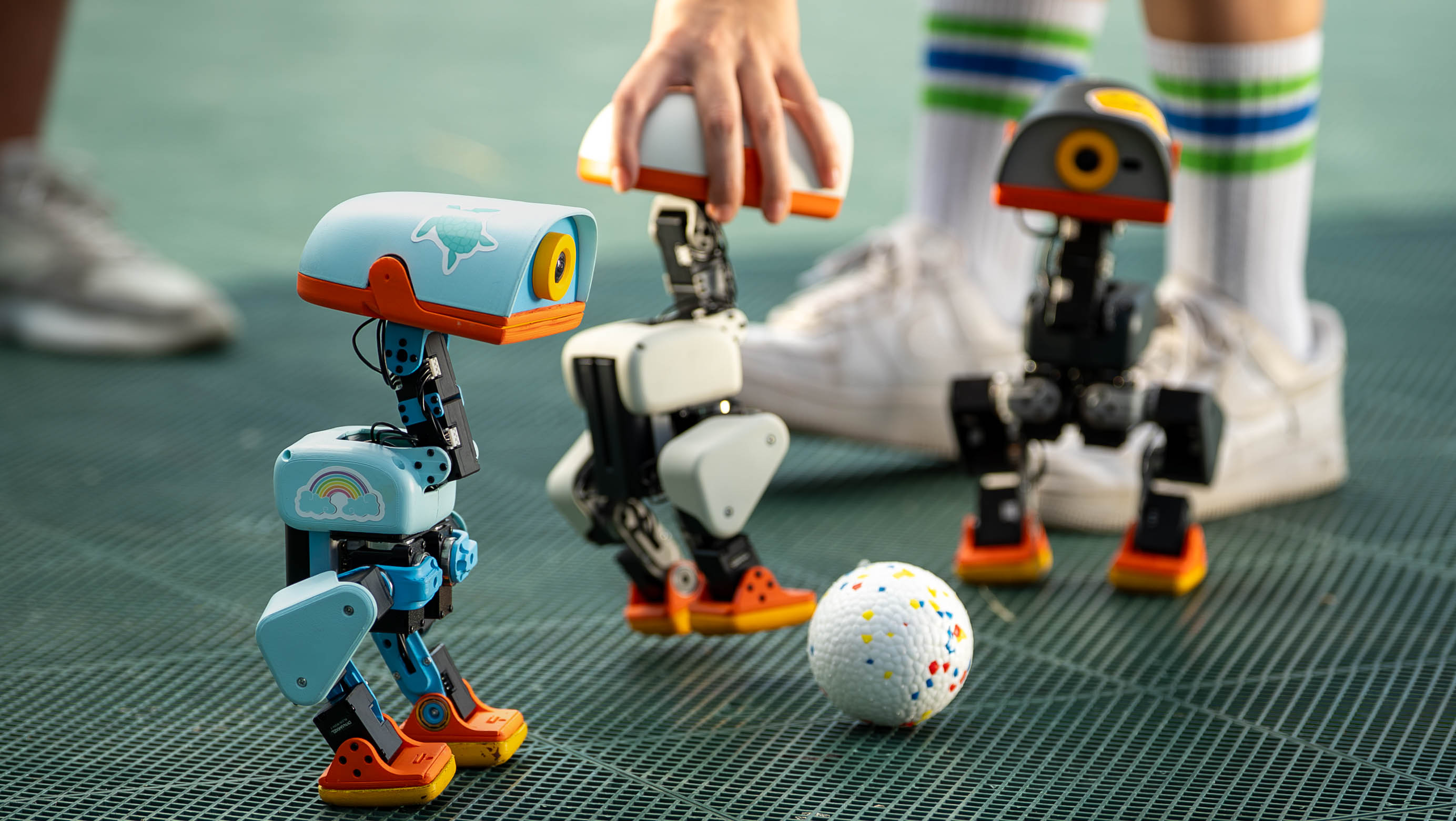
Pollen Robotics lists the robot at $399, with optional charging and development kits sold separately. One day after launch, Hugging Face co-founder Thomas Wolf said preorder value had passed $2.6 million. A Business Insider report syndicated by AOL also noted a four-to-six-month wait for new orders. That figure is not audited revenue, shipped units, or proof of margin. It is still an early demand signal that is separate from the sticker price.
Robotics launches often make one mistake: they sell a movement as if it were the whole product. Microduck reverses that order. The ready-made behaviors are the start, not the finish. Walking, crouching, getting up, kicking, and picking up objects give the buyer a first successful session before the deeper training loop begins.
The Hard Part Is The Training Loop
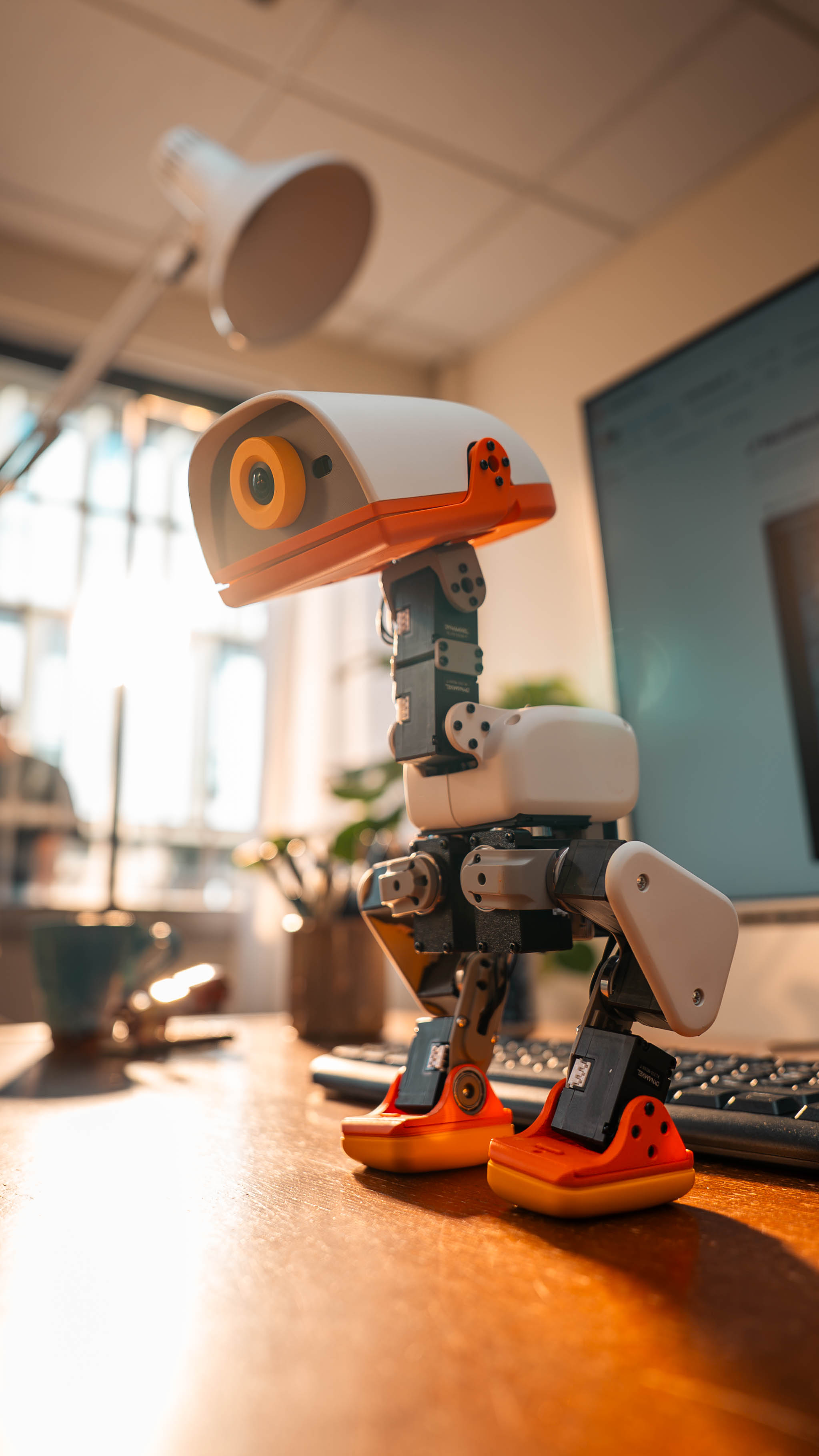
The problem behind Microduck is the least glamorous part of reinforcement learning: letting a machine fail repeatedly in simulation, adjusting the policy, and then moving that behavior onto real hardware.
On a large robot, one bad attempt can mean repairs, a long reset, or a safety issue. On a robot under 800 grams, failure is less expensive. It can fall, get back up, and let the user try again. The official feature list makes self-recovery part of the product because recovery lowers the operational cost of experimentation.
The $399 price therefore compresses more than hardware cost. It compresses the setup cost of entering physical AI. A developer who once needed a lab, a hardware platform, simulation tools, and substantial debugging time can buy a smaller path into the same loop.
Pollen’s launch article describes the sequence plainly: train in simulation, deploy to the robot, observe what breaks, improve the simulation, retrain, and redeploy. That is not only a technical workflow. It is the product design.
First Success Comes Before Deep Control
Microduck also solves a commercial problem for developer hardware. If the first experience is too hard, the product becomes shelfware before the user reaches the interesting work.
The controller matters for that reason. A buyer can move the robot immediately, see that the actuators and balance work, and understand the physical constraints before opening the deeper software stack. The product earns attention through direct play, then converts that attention into training.
That sequence is a familiar developer-tool pattern in a physical form. Give the user a fast first win. Make the next layer inspectable. Let the advanced workflow become attractive after the beginner workflow has created trust.
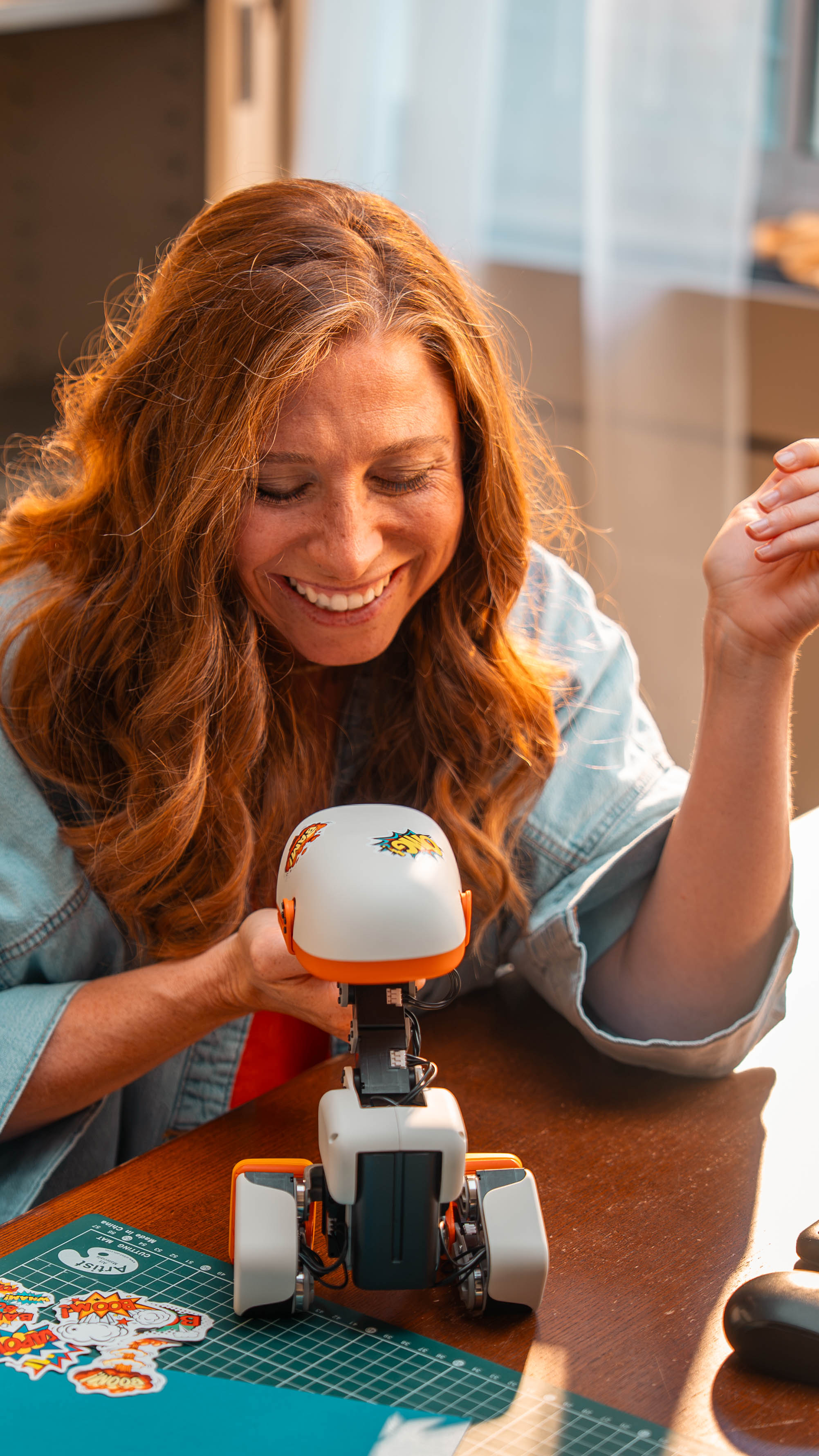
For physical AI, this is especially important. A notebook demo can be restarted instantly. A real robot has gravity, friction, tolerances, battery limits, and imperfect rooms. Microduck’s value is that it lets more people experience those constraints without turning every failed policy into a serious incident.
The Platform Bet Is Behavior Sharing
The bigger move is not only selling units. Pollen says users should be able to share new behaviors with the community, including the environment and training method behind the behavior. That is where Hugging Face’s influence is visible.
Hugging Face became important because models, datasets, and tools could be reused by people who did not create them. Microduck tries to move that logic into motion. A better recovery behavior, a more stable gait, a classroom exercise, or a playful interaction can become something the next user starts from instead of rebuilding.
That is the difference between a toy robot and a developer platform. A toy is consumed as delivered. A platform becomes more useful when users publish assets that others can adapt.
The comparison with Reachy Mini is useful because the products point in different directions. Reachy Mini emphasizes interaction: voice, vision, and expression around human communication. Microduck emphasizes action: how an algorithm moves through the physical world, fails, and tries again. They are not the same idea with different legs. They support different developer jobs.
What Is Not Proven Yet
Microduck has not proven that a platform business already exists.
The official press kit says the open source scope covers the software stack, not the mechanical or electronics design. That means the product should not be described as open source hardware. The preorder number also does not answer whether users will keep training new behaviors, whether they will share policies, whether the community will compound, or whether hardware delivery and margin will support the business.
The first delivery window is still a plan, with initial shipments targeted before Christmas 2026. Until real buyers receive units and use them over time, the strongest evidence remains a preorder signal plus a coherent workflow.
Even with those limits, the product order is worth copying. Do not begin by selling physical AI as a general-purpose robot. Start with a real task where failure is frequent, visible, and survivable. Make the first success quick. Then make every later success easier to share.
Microduck first sells a small robot that can walk. The more important bet is a desk-scale market for training embodied intelligence.