
Image source: Niural official AI Labs announcement image. The image is official promotional material, not third-party audit evidence.
Most AI products are still trying to prove they can sound like an expert. Niural picked a harder and more valuable entry point: payroll, benefits, payments, and compliance.
This work does not allow “almost right.” If payroll is wrong, employees notice immediately. If tax or benefits workflows are wrong, the company can face penalties and lose trust. If cross-border payments are slow, hiring and finance close both suffer. That is why Niural is worth studying. It is not another HR AI assistant. It places AI inside one of the enterprise back-office systems where errors are least tolerated.
Niural was founded in 2022. As of July 31, 2026, it is more than three years old, so this article treats it as an “old tree, new bloom” case rather than a brand-new startup. Its breakout signal is concentrated in the past 24 months. CB Insights lists total funding around $62.07 million, including an additional $21 million Series A-II in June 2026. Niural’s own announcement says it launched Niural AI Labs in June 2026 and expanded its Series A to $52 million. Built In lists the company at roughly 108 employees.
The commercial entry point is clearer than the funding. Niural’s website does not only ask visitors to contact sales. It publishes multiple pricing lines: U.S. Payroll Standard at a $100 monthly platform fee plus $20 per employee per month; PEO Basic from $59 per employee per month; PEO Plus from $120 per employee per month; Contractor Management at $49 per contractor per month; EOR and Contractor of Record from $299 per employee per month; and Global Payroll from $29 per employee per month.
That means Niural is not selling an AI feature. It is selling an operating bill that can follow a company from the first employee to a multinational team.
Why payroll is a strong AI entry point
AI founders often underestimate payroll.
On the surface, payroll looks like an old category. ADP, Paychex, Gusto, Rippling, and Deel are already there. It does not look as viral as image generation, code generation, or video creation.
From a commercialization perspective, payroll has three natural advantages.
First, it is a required budget. A company can skip one productivity tool. It cannot skip paying employees.
Second, it has explicit error costs. Employees, tax agencies, insurers, contractors, and finance teams all sit on the same chain. A mistake is not merely a poor experience. It is a liability event.
Third, payroll expands with the company. A business moving from 10 employees to 100, from one state to multiple states, or from local employees to international contractors does not add complexity in a straight line. Back-office complexity compounds.
Niural positions itself as “One HR & Payroll Platform. From First Hire to IPO.” Its product range covers U.S. Payroll, U.S. PEO, EOR, Contractor Management, and Niural Pay. The position it wants is not only payroll software. It wants to become the system of record for hiring, onboarding, payments, benefits, compliance, and finance operations.
Once a company owns that position, AI’s value changes.
A normal AI assistant answers questions beside the system. Niural wants AI to execute inside the system.
EMMA sells execution rights, not chat
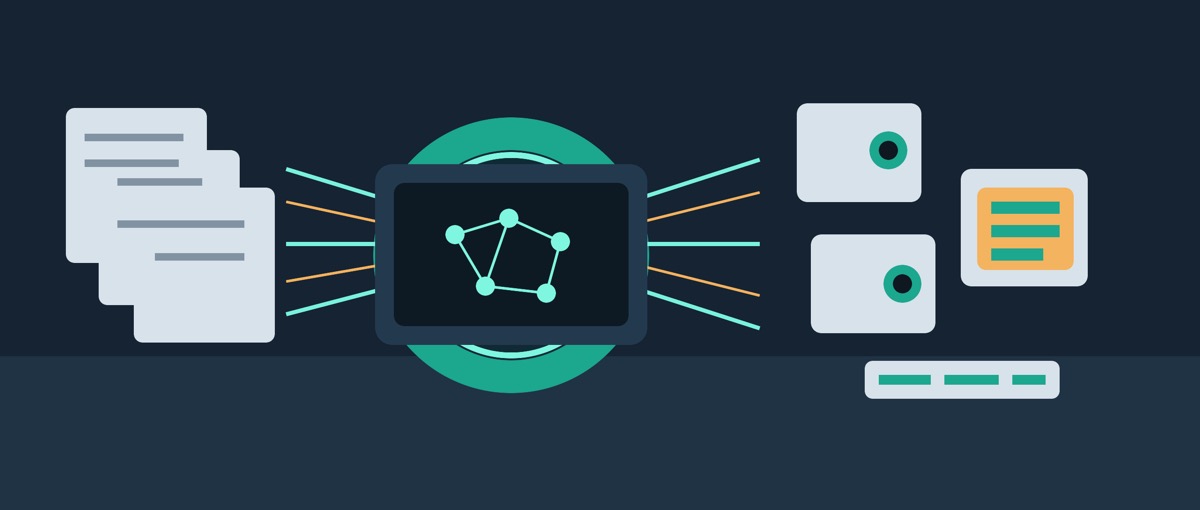
Niural’s AI page describes EMMA as an AI co-worker and says, “Most AI today just reasons. EMMA executes.” It says EMMA can handle payroll precision, onboarding automation, expense supervision, and back-office freedom: flagging payroll anomalies in real time, automating onboarding and compliance checks, reviewing expenses, generating contracts, and producing complex reports.
Those claims come from an official marketing page and should be treated carefully. But they reveal the product direction. AI is not a separate clever brain sold to the user. It is an execution layer tied to payroll data, benefits rules, payment flows, compliance records, and workflow permissions.
That is what makes Niural more instructive than a generic HR copilot.
If an AI only tells a manager that an employee may be misclassified, it is an advisory tool. If it can access the contract, jurisdiction, tax setup, payment method, benefit plan, and approval flow inside the same product, then connect risk detection, document generation, onboarding, and payment, it starts to become the kind of execution system companies will pay for.
In its June 2026 AI Labs announcement, Niural says payroll and benefits are a production environment: every decision has a correct answer, a deadline, and a consequence. The company says that constraint forced it to build workflow orchestration, agent decomposition, verifiable data, evaluation systems, and accountable actions. The phrasing is promotional, but the product judgment is sound.
Enterprises do not lack AI advice. They lack execution systems that can be audited, assigned responsibility, and trusted to move money and documents to the right place on time.
The revenue signal is strong, but the evidence level matters
In the same announcement, Niural says that after its Aetna major medical partnership went live in April 2026, its PEO product surpassed $200 million in annualized gross revenue. The company also says it moves billions of dollars in global transactions annually for customers including Rillet, Sevaro, ConductorOne, and Polygon.
Those are notable numbers, but they need evidence labels. They are company disclosures, not independently audited figures. They should not be treated as verified ARR, and they do not prove margins, retention, or cash-flow quality.
Even with that caveat, they are useful business signals. Niural is not telling a story based only on free users. It ties the revenue narrative to PEO, benefits, and payments, categories where real money moves through the system.
That differs from many AI applications.
Many AI products grow because users tried them once. Niural’s growth looks more like customers handing over payroll, benefits, contractors, and payment responsibility. The first signal proves interest. The second proves trust.
For AI product builders, the second signal is harder and more valuable.
The pricing page reveals the expansion path
The most interesting part of Niural is its pricing page.
U.S. Payroll is the entry point. The Standard plan charges a $100 monthly platform fee plus $20 per employee per month and covers multi-state payroll, W-2s, 1099s, compliance, PTO, reporting, and benefits administration.
U.S. PEO moves up the stack. PEO Basic starts at $59 per employee per month, and PEO Plus starts at $120 per employee per month, adding HR consulting, workers’ compensation, EPLI, medical, dental, vision, and 401(k) components.
Global teams expand the surface further. Contractor Management is $49 per contractor per month. EOR starts at $299 per employee per month. Global Payroll starts at $29 per employee per month and covers more than 150 countries.
This is not a single-point SaaS price list. It is a customer lifecycle path.
A company first needs to pay employees. As it becomes more formal, it needs PEO and benefits. When it hires internationally, it needs EOR. When it has overseas entities, it needs Global Payroll. When contractors multiply, it needs contracts, payments, invoices, tax forms, and misclassification warnings.
Niural’s ideal state is that customers add modules instead of changing systems at each stage of growth.
If an AI agent runs on top of that system of record, it can become more valuable as the customer adds more data and more permissions. It can know who was hired, what each person should be paid, which tax form applies in which country, which expense looks risky, and which benefit plan affects costs.
That is the compound interest of vertical AI. It is not the same as embedding a chat box on every page.
Why older companies can be reopened by AI
Calling Niural an “old tree, new bloom” may sound odd. A company founded in 2022 is not old in a normal software market.
In this AI product archive, the user uses three years as the dividing line. Niural is past that mark, but its growth period is clearer in the last 24 months: a $31 million Series A in 2025, global entity payroll, AI benefits selection, AI Labs in 2026, and another funding expansion in June 2026.
That illustrates a broader pattern. AI commercialization does not only happen in companies formed yesterday around a new model. Some of the strongest opportunities may come from companies that spent years building payments, compliance, data systems, and customer relationships, then used maturing AI models to turn old infrastructure into a new product narrative.
From the outside, Niural is a payroll company. From the inside, it is building a foundation for AI execution.
Payroll, taxes, benefits, and cross-border payments are not good places to “ship first and fix later.” Niural has to own enough underlying workflows, partnerships, audit data, and customer trust before AI can take over part of the work.
That is difficult for lightweight AI apps to copy. A chatbot can be built quickly, but it does not have permission to run payroll, file taxes, adjust benefits, or move funds.
Permission itself becomes part of the product moat.
Two lessons for builders
The first lesson is to ask not only whether AI can do the work, but whether the customer is willing to transfer responsibility to the system.
AI can explain a payroll policy. That does not mean a company will let it run payroll. AI can read a contract. That does not mean a customer will let it carry misclassification risk. Real commercialization begins when responsibility transfers: the customer not only listens to the recommendation, but allows the system to execute, record, verify, and carry workflow consequences.
The second lesson is that an agent’s value comes from executable context.
If Niural only built a payroll Q&A assistant, it would struggle to separate itself from large models or incumbent HR tools. Its actual opportunity comes from the fact that payroll, benefits, payments, compliance, contracts, employees, and contractors can all live in one system. AI does not only understand the question. It can know which table to inspect, which workflow to call, who must approve, and which jurisdiction’s rule matters.
That is why vertical AI often starts with workflow sovereignty rather than model capability.
Models will get cheaper. Advice will become abundant. What remains scarce is the business position that lets AI execute safely.
Niural’s signal is that AI may first make money not in the flashiest creative category, but in old, heavy, responsibility-dense back-office systems. Whoever earns execution rights in those systems has a chance to move agents from “able to speak” toward “able to be responsible.”