
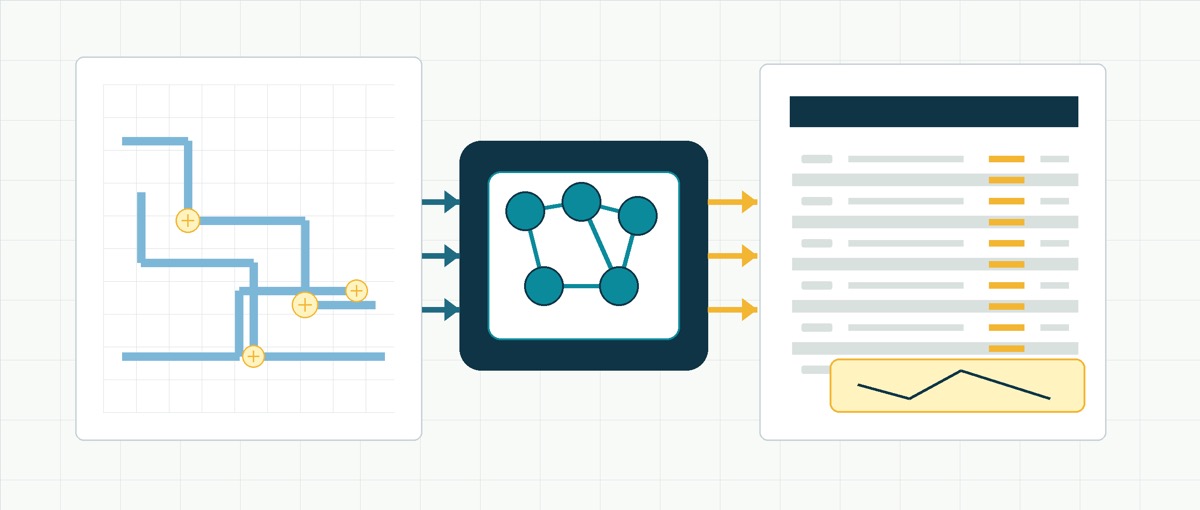
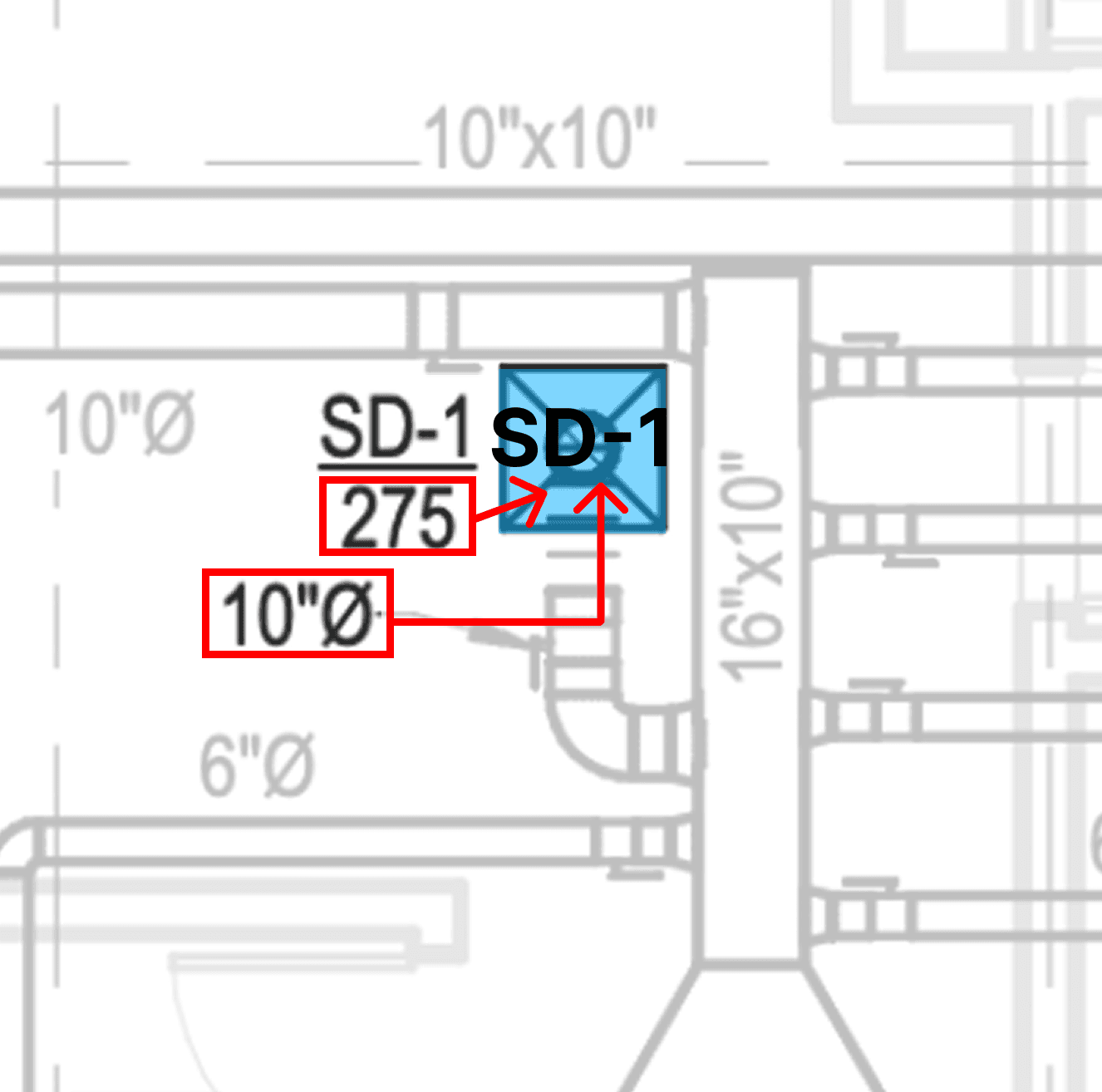
Image source: Rebar public product material. The visual explains how the product identifies and labels equipment attributes in drawings and is not third-party audit evidence.
The scariest thing for a commercial HVAC estimator is not that the drawings are hard. It is that time is not on their side.
A project arrives. The drawings are a stack of PDFs. The specifications are long and scattered. The team has to read page by page, circle equipment, check models, count quantities, assemble the bill of materials, and turn the result into a quote. Move too slowly, and the bid window may close. Miss one critical item, and margin may be eaten later by rework.
That is where Rebar enters. It does not begin with a broad story about construction needing AI. It puts AI inside a specific transaction point for commercial HVAC suppliers: from drawings to quotes.
Quoting speed is a business
Rebar’s story starts from a plain commercial insight. In construction supply chains, quoting is not back-office busywork. It is the revenue entry point.
Crunchbase News reported that Rebar raised a $14 million Series A in 2026 from investors including Prudence, Zero Infinity Partners, Founder Collective, Villain Capital, and Optimist Ventures. Beamstart reported that the company was founded in October 2024 by Evan Brown and Andrew Schwartz, making it a native new product less than three years old.
The more important signals are tied to the quoting workflow. A Grishin Robotics funding summary on LinkedIn said Rebar had 40 customers, seven of whom also became investors, that customers improved quote speed by 60% to 70%, and that ARR doubled in the first six weeks of 2026. Those operating figures appear to come from company or investor-distributed claims, not third-party audit evidence, but they point to the right commercial unit: users are not buying “smart AI.” They are buying the ability to participate in more projects faster and with fewer misses.
That is different from many AI tools. General AI often sells saved time, but saved time does not always become revenue. In Rebar’s market, the link is more direct. Faster quoting means more opportunities processed. More stable drawing interpretation means less missing equipment and less rework. Timely response helps sales teams enter the customer’s decision rhythm.
AI is not a chat box here. It is part of the quoting machine.
It starts with the dirtiest workflow slice
Rebar describes itself as an AI operating system for HVAC, plumbing, and electrical trades, but it does not begin by claiming to be an all-purpose operating system. It starts with takeoff.
Takeoff means extracting materials, equipment, quantities, and relevant attributes from construction drawings and specifications. The word sounds narrow, but it is exactly where the quoting process gets stuck. Information is trapped in PDFs. Drawing versions change. Equipment symbols are dense. Estimators have to understand drawings, products, construction practice, and customer habits at the same time.
Rebar’s site lists capabilities such as AI Takeoff, AI Chat, Change Summaries, Performance Data, and real-time collaboration. It says the product can generate takeoffs in minutes instead of days, label equipment, summarize changes, and capture performance data. Those efficiency claims are official claims, not independently audited results. But the product design is clear: Rebar is not only reading a document. It places drawing review, annotation, change detection, collaboration, and quote preparation in one workspace.
That is the difference between vertical AI and generic document AI.
If a user only throws a PDF into a model and gets a summary, they will quickly ask whether it is accurate, whether it can be delivered, and who owns the mistake. But if the product is designed around the estimator’s real actions, AI output becomes a structured work product that can be reviewed, modified, shared, and carried into the quote.
Rebar is not selling model capability. It is selling an interface for completing quote preparation faster.
Cold industries can have clearer buying reasons
AI founders are often attracted to large markets: customer support, sales, writing, coding, design. Those markets are large, but they are crowded, and buyers have been pitched countless AI assistants.
Commercial HVAC looks less glamorous, but it has several conditions that fit AI productization.
First, the workflow is frequent and high-friction. Suppliers and rep teams continuously receive project drawings. Quoting is not a one-time job; it is the rhythm of the sales machine.
Second, the cost of error is legible. Missing equipment, misreading specs, or failing to catch drawing changes can affect quote accuracy and project margin. Users are not trying AI for novelty. They are trying to reduce a known operating risk.
Third, the output can be inspected. A bill of materials, equipment count, drawing annotation, and quote-preparation packet are easier for professionals to review than a vague piece of text. AI does not need to replace the estimator on day one. It needs to compress the most repetitive and time-consuming front-end work enough to enter the workflow.
Fourth, the expansion path is natural. Rebar’s website says the product begins with takeoffs and expands into spec review, submittals, and bid management. That means it is not adding random features. It is moving up and down the same quoting and bidding chain.
That matters because many AI products fail to scale not because they lack features, but because every new feature has to prove value in a new context. Rebar’s path is more chain-like. If it earns trust at the drawing and quote entry point, it can move into adjacent tasks in the same workflow.
Usage pricing fits the value better than seats
Rebar does not publish standard pricing, but its site emphasizes “pay for usage, not seats” and “unlimited humans.” That reveals a commercialization judgment. In this workflow, value is not necessarily created by how many people log in. It is created by how many projects, takeoffs, and quote-preparation cycles the team can process.
That differs from traditional per-seat SaaS.
Estimating work is rarely completed by one isolated person. Sales, engineering, estimating, supplier, and customer-success roles may all participate. If each collaborator adds seat cost, the product may actually discourage collaboration. Usage-based packaging lets Rebar bring more people into the workflow while charging closer to customer value: project volume, processing volume, and quoting throughput.
There are challenges. Usage pricing requires clear unit economics. The model cost, support cost, customer-success cost, and review cost for each drawing package must be covered by revenue. Construction files are complex, and customer processes vary. If delivery cost stays high, growth may turn into a service burden.
That is exactly why the case is worth watching. Rebar is not packaging AI as “replace an estimator.” It is closer to selling the throughput of a quoting line. Customers pay not because the model can talk, but because project response gets faster and the team can enter customer budget and procurement decisions sooner.
The builder lesson: sell time inside a transaction window
Rebar’s lesson is not simply “go build construction AI.” More precisely, it is to look for workflows trapped between messy documents, professional judgment, and a transaction window.
These workflows share a pattern: the input is dirty, the output is specific, mistakes are costly, customers already pay people to do the work, and the result connects directly to revenue, cost, or risk. If AI can compress the slowest part into a reviewable product flow, it can move from tool to operating system.
Rebar’s non-consensus insight sits there. It does not fight for traffic in the hottest AI surfaces. It enters an industry still powered by blueprints, PDFs, and human experience. It does not promise to replace the whole role. It first goes deep on the slowest pre-quote takeoff work. It does not only sell a feeling of efficiency. It points efficiency toward a clear business result: faster quotes, more projects, fewer misses.
Many AI products say they save time. The more valuable products save the kind of time that would otherwise miss a transaction window.
If founders only ask who opens software most often, they may end up in a crowded general-tool market. Rebar suggests that the next resilient AI products may hide inside cold but high-responsibility business nodes: quoting, review, filing, reconciliation, claims, scheduling, and delivery.
Users may not care that it is AI. They care whether it makes a deal happen earlier and more reliably.