
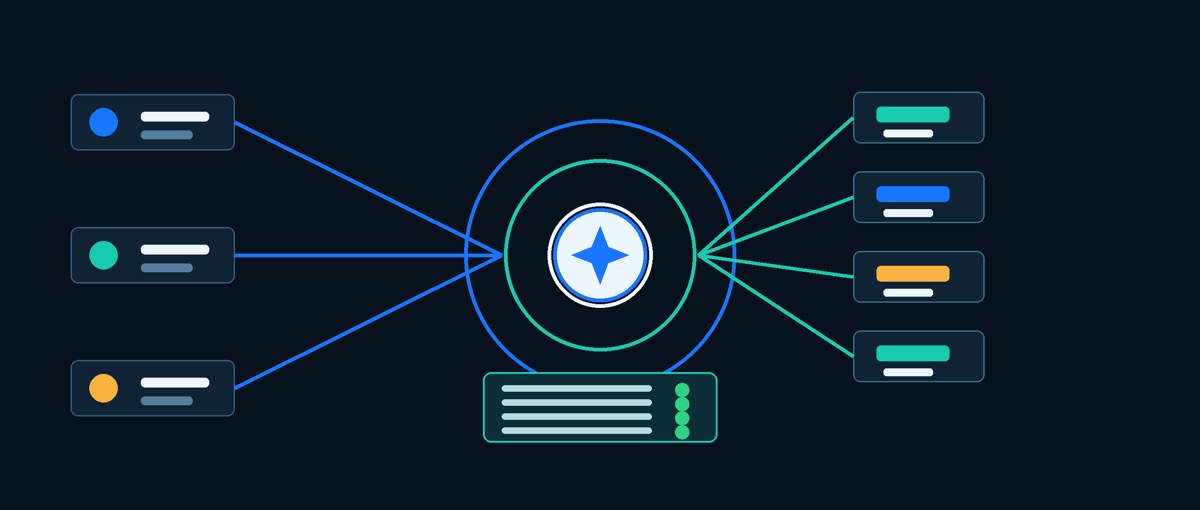

Image source: Phia App Store public screenshot. The image shows Phia surfacing matches, original price, alternatives, and savings while a user browses a product. It is not third-party audit evidence.
You see a dress in Safari. Before you decide whether to buy it, a layer tells you that it found the same or similar item, that the original price is $139, that another channel has it for $45, and that you can save $94.
That is the position Phia wants to own. It is not turning AI into a chat box. It is not only a coupon plugin. It inserts itself into the few seconds between seeing a product and paying: check the price, find alternatives, apply coupons, monitor drops, and offer rewards.
The entry point is small. The commercial value is large.
The Phia App Store page lists it as a free shopping app with a 4.8 rating and 20,170 visible reviews. The same developer description says Phia serves 1.5 million shoppers, covers 350 million items, and works across more than 220,000 sites. Those user and coverage numbers are developer claims, not independently audited data, but they show that Phia is past the demo stage.
TechCrunch reported in January 2026 that Phia raised a $35.5 million Series A. For builders, the more important point is the product assumption behind the funding: consumer AI can remain a content tool if it only recommends, but it can become a commercial entry point if it enters the transaction path.
It sells shopping decision power
On the surface, Phia looks like an AI fashion shopping assistant. Users can ask it whether a price is fair, find cheaper or similar options, apply coupons, set price-drop alerts, and earn Phia Rewards.
Taken apart, those features rebuild a shopping decision chain.
In the old flow, a consumer might discover an item on TikTok or Instagram, visit the brand site, search Google for alternatives, check secondhand prices, then hunt for a coupon or cashback option. Every step creates leakage. It also makes it difficult for brands to know which channel really influenced the purchase.
Phia combines those fragments at one entry point. When a user sees a product, it can answer “Should I buy now?”, “Where is it cheaper?”, “Is there a deal?”, and “Should I wait?” AI is not generating content here. It is compressing decision time.
That is why Phia is more interesting than a normal coupon tool. Coupon tools usually appear near checkout and capture the last mile. Phia tries to appear earlier, at product discovery, price judgment, and alternative recommendation. It wants to be the interpretation layer for shopping intent.
Free for users, paid by outcomes
Phia is free for consumers, which the App Store page confirms. Free does not mean there is no business model. It means the company first grows the consumer entry point, then monetizes around transaction results.
From public information, the model looks like B2B2C. Consumers use Phia to save money, compare, and earn rewards. Brands and retailers may pay for recommendation, click, conversion, and attribution outcomes. Phia describes itself as a personal shopping assistant, and its partner narrative emphasizes reaching shoppers and driving sales. Sales-contribution data from official pages should be treated as company claims rather than audited facts.
The attraction of the model is clear. Consumers do not want to pay a monthly fee for a tool that might save them money. Brands do pay for high-intent traffic and attributable orders.
That is a broader rule for AI agent commercialization. The closer an agent gets to a transaction, the lower the user’s direct payment resistance, the clearer the merchant budget, and the easier the ROI story becomes. Phia does not have to persuade users that AI is worth $10 per month. In one purchase, it can show, “I saved you $94.” For a brand, it can claim, “I influenced this sale.”
The moat is context and attribution
If Phia only searched for coupon codes, browsers, payment companies, brand loyalty systems, and larger commerce platforms could copy it.
Its longer-term opportunity is shopping context. What products has the user saved? Which brands do they like? How long will they wait for a discount? Do they prefer new or secondhand? Are they price-sensitive, style-sensitive, or both? If that data accumulates, Phia becomes more than a comparison tool. It becomes a personal shopping memory layer.
Connect that memory to rewards, brand partnerships, and transaction attribution, and the system becomes more powerful. It can tell users where to buy and tell brands which person bought, when, and why.
But that creates a hard problem. Once the business depends on who deserves credit for a purchase, attribution is no longer a back-office metric. It becomes product trust.
TechCrunch reported on July 10, 2026 that Phia had been accused of cookie stuffing, meaning it may have received affiliate credit for purchases it did not actually earn. This should be handled carefully. It is a reported dispute, not a regulatory finding, and it does not prove that every transaction is problematic.
Still, the controversy exposes the central tension for shopping agents. The closer an AI product gets to transactions, the easier it is to get commercial budget. It also has to prove that it is not abusing its position at the entry point.
Entry businesses need audits by design
The most useful lesson from Phia is not simply “build an agent in a consumer category.” It is that Phia translates a high-frequency, low-payment-willingness consumer need into a merchant-funded transaction outcome.
Consumers want not to overpay, not to compare manually, and not to miss coupons. Brands want higher-intent traffic and explainable orders. Phia connects the two sides, which helps it avoid the ceiling of consumer subscriptions.
But when an AI product enters a transaction flow, conversion rate cannot be the only north star. It must answer harder questions. Did the user actively trigger the recommendation? Does the brand know why this order was attributed to Phia? How are returns, cancellations, and repeated touches handled? Can platforms, merchants, and users audit what the agent actually did?
These sound like compliance and operations details. They are really the foundation of commercialization.
Many AI founders like to say they are building the entry point. Phia shows why the entry point is valuable, but also why it is not free power. Whoever stands between the user and the transaction has to turn recommendations, attribution, permissions, and auditability into product features.
Otherwise, the faster the product grows, the faster the trust bill comes due.