
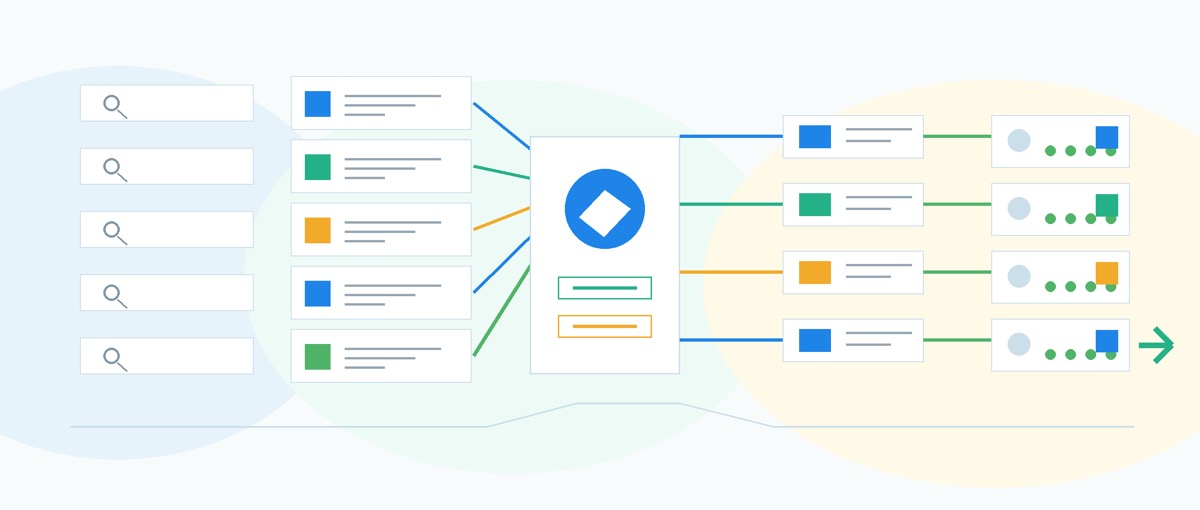
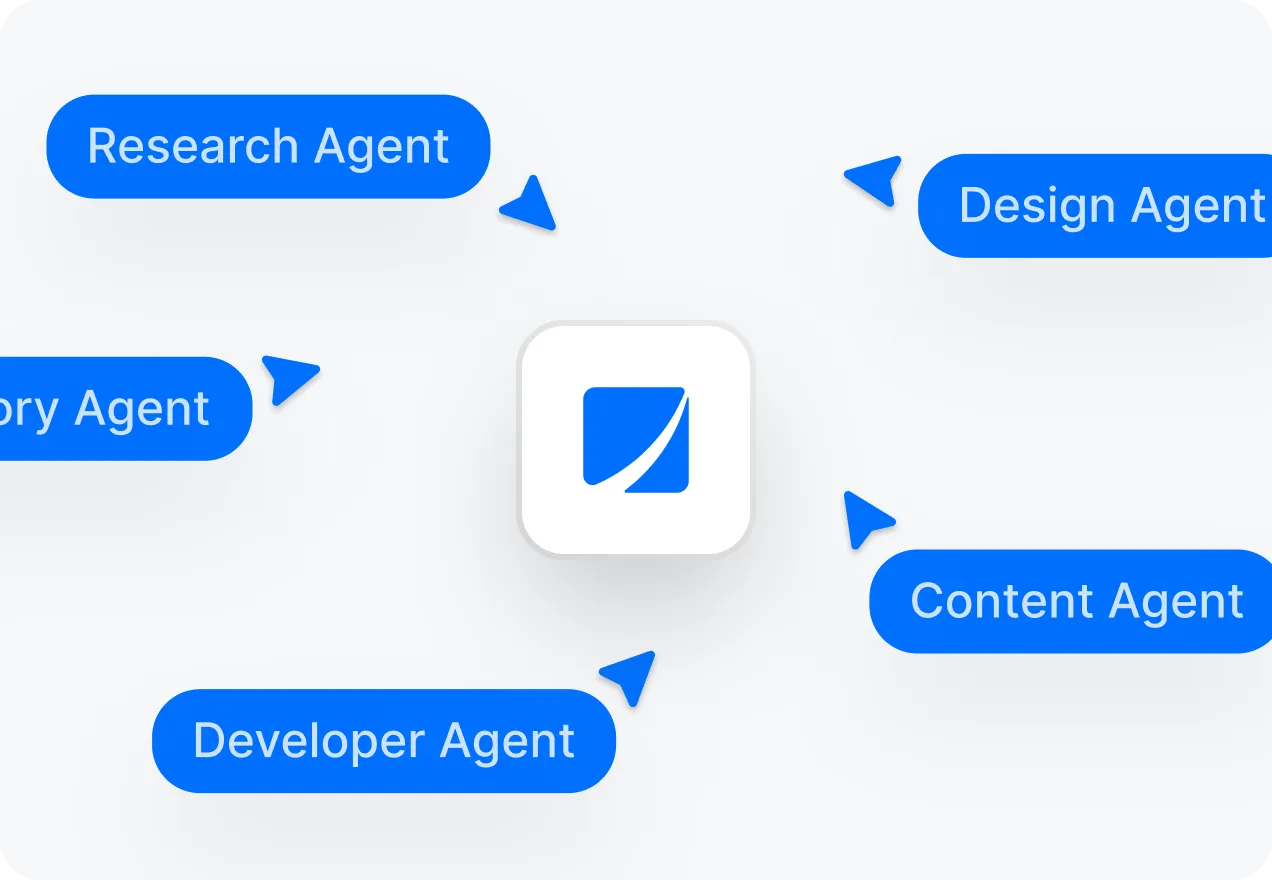
Image source: Gushwork public product material. The visual explains how the product divides marketing work across multiple agents and is not third-party audit evidence.
An industrial distributor now faces an awkward question. Customers may no longer begin by opening Google and typing “supplier near me” or “authorized dealer for this equipment.” They may ask ChatGPT, Gemini, or Perplexity directly.
But the owner does not really care about the “AI search trend.” The owner cares about whether buyers can still find the company, whether those visitors leave an inquiry, and whether the inquiry becomes revenue.
Gushwork attacks that chain.
TechCrunch reported in February 2026 that the 2023 company raised a $9 million seed round, bringing total funding to $11 million and valuation to about $33 million. More important, Gushwork told the publication that roughly three months after launching its AI search product, it had more than 300 paying customers, about $1.5 million in ARR, subscriptions starting at $800 per month, and 50% to 80% monthly growth.
Those operating numbers are company-disclosed media figures, not audited results. But they are enough to show that AI search is not only a new traffic surface. Someone is already packaging it as a lead-generation system SMBs will pay for.
It sells qualified demand, not rankings
Many AI search companies start with brand visibility. Is the brand mentioned in Perplexity, ChatGPT, Google AI Overviews, or Gemini? That angle fits large companies. Brand teams have budget and care about whether the company is present in new discovery surfaces.
Gushwork goes another way.
Its target customer is not a marketing technology expert. It is a B2B small or midsize business that lacks a full marketing team and does not want to manage a stack of tools. Gushwork describes itself as an AI agent system that helps businesses get found across AI search, Google, and paid channels, then turns that interest into marketing-qualified leads.
The key word is not AI. It is leads.
Gushwork’s site cites 1,000+ companies, 8,000+ leads generated per month, and more than $10 million in revenue influenced. These are official company claims, not independent proof. But they show the packaging: customers are not buying an exposure graph. They are buying the possibility of more qualified inquiries every month.
That matters because SMB owners rarely create a new budget category for a new concept. They already pay SEO agencies, website vendors, content writers, ad managers, and sales assistants. Gushwork repackages those scattered budgets into a result-oriented growth system.
AI search becomes a production line
Gushwork’s product value is not simply “generate more articles.” If that were the product, cheaper content tools would quickly replace it.
The interesting part is how Gushwork decomposes AI-search lead generation into a sequence of jobs.
On its AI Search solution page, the workflow begins with a Memory Agent that learns the customer’s products, services, buyers, geographies, qualifications, and brand language. A Research Agent studies buyer questions across Google and AI search. A Strategy Agent analyzes current ranking results, finds gaps, and turns customer context into a content plan.
Then a Content Agent creates service pages, location pages, comparison pages, FAQs, blogs, and product-led pages, publishing through Gushwork Feed. An Authority Agent handles citations, backlinks, and trust signals. A Refresh Agent updates pages based on performance. A Follow-up Agent moves inbound leads toward calls, qualification, and booking.
This is not a single magic prompt. It is an outsourced marketing line.
That explains the pricing. TechCrunch reported starting subscriptions around $800 per month. For a large enterprise, that is a small software line item. For an SMB, it replaces part of the agency, contractor, content, tooling, and sales-support budget.
It also explains why Gushwork uses a hybrid AI-plus-service delivery model. It cannot only give the customer a dashboard and ask them to learn AI search optimization. It has to bundle research, content, publishing, authority, tracking, and follow-up. Otherwise the customer would ask: I already do not have a marketing team, so why are you giving me another AI tool to operate?
For AI builders, the lesson is blunt: SMBs often buy less work, not more capability.
Large enterprises can buy configurable platforms because people exist internally to run them. Small businesses prefer result systems because operation is the missing resource. Gushwork puts agents in the background and shows customers leads, pages, inquiries, and revenue influence.
The risk is inside the business model
Gushwork is not a light model.
TechCrunch reported that the company automatically creates and refreshes search-optimized content, and may build 10 to 20 backlinks for each customer through a network of about 200 to 300 partner sites. That can make the product feel closer to outcomes, but it creates two risks.
First, quality control becomes a core cost. If pages become templated or backlink quality declines, customers may see short-term traffic but face long-term damage when search platforms change rules.
Second, an $800 to $900 monthly price creates limits on delivery depth. Gushwork has to keep compressing research, writing, publishing, authority building, monitoring, and follow-up costs with AI. Otherwise faster growth simply creates more service pressure.
Third, lead quality is harder to scale than lead quantity. The real metrics to watch are retention, renewal, conversion from lead to contract, and whether the system works across industries without becoming a custom agency.
Those risks do not weaken the case. They explain why it is worth studying.
Gushwork did not choose the coolest AI entry point. It chose a plain commercial question: where do customers find me, and how does that attention become money?
The real opportunity is budget translation
Gushwork shows that one of the most underrated steps in AI commercialization is translating a new technical shift into a result that an old budget already buys.
“AI search visibility” is a new concept. “More qualified leads each month” is an old demand.
“Multi-agent marketing system” is a new architecture. “I do not need to hire a full marketing team” is an old pain.
“Buyer questions inside ChatGPT, Gemini, and Perplexity” are a new entry point. “Make buyers find me and leave an inquiry” is an old budget.
That is the most useful part of Gushwork’s case. It does not ask SMBs to create a separate budget for AI search. It compresses AI search, content, backlinks, website publishing, lead capture, and sales follow-up into a purchasable growth result.
For founders, new AI surfaces matter. But the revenue usually comes from whether you can take over the messy work behind the surface and describe the result as something customers already know how to buy.