
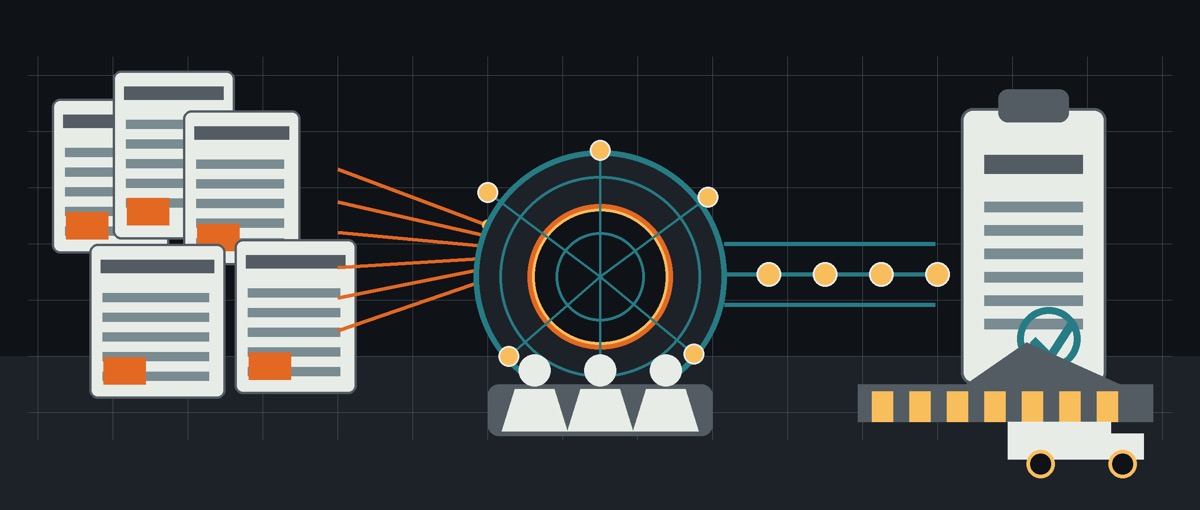
After a Rate Confirmation is signed, the freight broker’s real work begins.
Has the driver left? Did the ETA change? Does the customer need to know now? When will the proof of delivery arrive? Across the TMS, email, phone, and VoIP, each action is small. But every load repeats the same chain. The more orders a brokerage handles, the more the back office becomes a net that is never fully repaired.
Freight Hero attacks that net.
The company was founded in 2025 and remains a native new AI product. In July 2026, Axios reported that Freight Hero raised $5 million at a valuation above $22 million. The company’s own site states the promise directly: it does not sell a new system; it manages every load for freight brokerages, from signed Rate Confirmation to collected POD.
That sentence matters more than “AI freight tool.”
Freight Hero is not mainly selling software seats. It is selling back-office responsibility.
Freight brokers do not need another dashboard
Many vertical AI companies start from efficiency: AI writes, checks, replies, or summarizes. In freight brokerage, the problem is not only efficiency.
It is ownership.
Each load in transit requires status tracking, pickup and delivery confirmation, ETA capture, driver replies, POD collection, exception detection, and escalation. The task list on Freight Hero’s site is almost exactly the repetitive, fragile, error-prone work that brokerage operations teams handle every day.
Traditional SaaS says: here is a tool, use it yourself.
Freight Hero says: we will run this part of the workflow.
Its positioning is “AI + Expert Humans.” AI handles routine work, freight experts handle exceptions and escalations, and the team operates inside the customer’s existing systems and SOPs. The company also emphasizes that it connects to current TMS, email, and VoIP tools, so customers do not need to retrain teams around a new platform.
The commercial logic is clear. Customers may not want to “adopt AI,” but they do want to move more freight, serve customers better, detect exceptions earlier, and avoid adding headcount.
It packages AI as expansion without hiring
Freight Hero’s website cites metrics such as cost reduction, time saved per load, and faster issue detection. Its FortFreight case study also mentions cost impact, displaced work, and outbound call reduction. These figures are company and customer claims, not independently audited data.
Even with that caveat, they reveal an important product design choice. Freight Hero does not anchor value in how smart the AI is. It anchors value in how much operating headcount can be avoided, how quickly exceptions are caught, and whether customers can grow without growing the team at the same pace.
That is different from many AI tools.
If you sell an AI assistant, the buyer asks: how accurate is it, will employees use it, and does it create another system to manage?
If you sell a managed operating workflow, the buyer asks: can you follow my SOP, who handles failures, how fast can you launch, and can I avoid hiring?
Freight Hero changes the question from “Should I buy AI software?” to “Should I outsource this back office process to an AI-augmented team?” That reframing is the most useful part of the case.
Human-in-the-loop is the product wrapper
Many AI companies describe human-in-the-loop as if they are admitting that the model is not good enough.
Freight Hero turns it into the selling point.
Freight brokerage back-office work is not clean data entry. Drivers may not answer. Customers may change requests. POD formats vary. Exception statuses require judgment. Carrier and customer communication also carries context that does not fit neatly into structured fields.
If Freight Hero sold pure AI, customers would naturally worry that every mistake comes back to their own team. So the packaging is not “AI replaces people.” It is “AI handles routine actions and freight experts keep reliability and accountability.”
That makes Freight Hero look more like an AI-enabled operations company than a traditional software company. It acknowledges real-world mess first, then turns that mess into a service boundary.
Dynamo Ventures announced in 2025 that it had incubated Freight Hero with Andrew Ng’s AI Fund. The announcement noted founder Andre Luis Martins Filho’s logistics background, including Uello. That helps explain the product choice. Freight Hero did not begin with a beautiful dashboard. It began with the least attractive part of brokerage operations: work the customer would rather stop managing.
One mistake vertical AI founders often make is assuming that a hated workflow means users want a better tool for doing it themselves.
Often, what users really want is for someone else to own the workflow.
The moat may be SOP, not the model
Freight Hero does not publish standard pricing. Its site says “Pay for outcomes, not headcount,” which points toward a managed-service or outcome-linked model rather than a transparent per-seat subscription.
That has two advantages.
First, value aligns with business results. A brokerage owner does not need to understand model architecture. They need to see whether load tracking, exceptions, customer communication, and POD recovery consume less labor.
Second, switching costs can accumulate in operations. Once a customer hands Freight Hero its SOPs, carrier communication patterns, escalation rules, TMS fields, and email templates, the company is not only collecting data. It is learning how that brokerage runs freight.
That is also the risk.
If the human expert share remains too high, Freight Hero can slide back toward traditional BPO and lose margin to labor. If AI does not steadily absorb more routine work, growth will be limited by service delivery capacity.
The key thing to watch is not only whether Freight Hero can raise more money. It is whether the human share inside “AI + expert takeover” keeps falling while customer trust stays high.
What builders should learn
Freight Hero shows that vertical AI commercialization does not always begin by making the customer use a new product.
Sometimes the better entry point is taking over a painful process the customer already understands and no longer wants to manage.
The key is not to describe AI as broadly capable. The key is to draw a specific boundary: where the work begins, where it ends, which actions are automated, which exceptions are escalated, who owns the result, and how quickly it can go live.
Freight Hero chose the back-office line from Rate Confirmation to POD. It is narrow enough to deliver, frequent enough to matter, and close enough to cash flow and customer experience that owners care.
Many AI products should reconsider the same choice.
Users may not want another AI tool. They may want one fewer process to manage.