
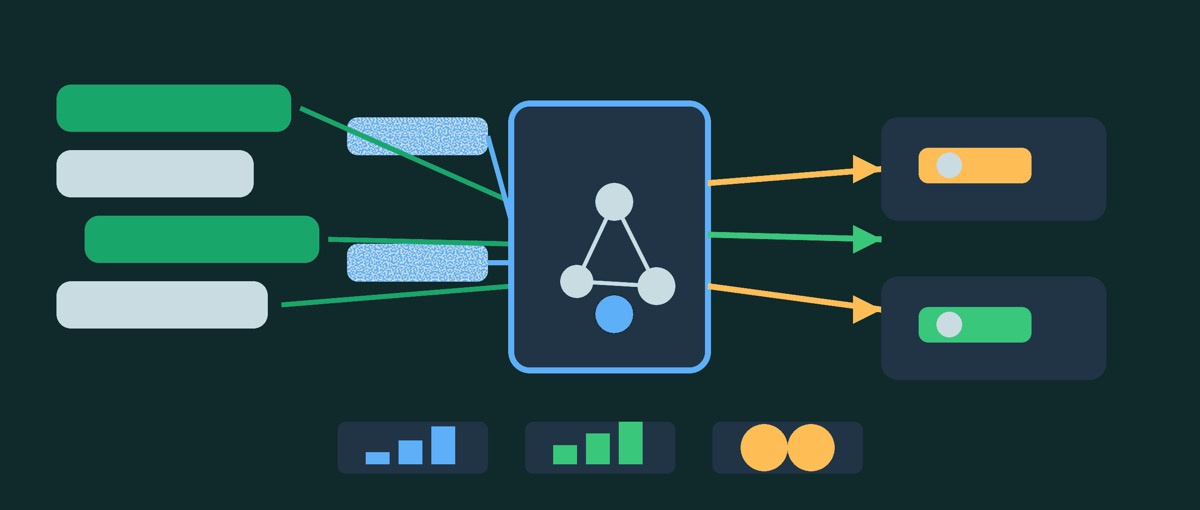

Image source: Respond.io website. The official product visual shows a unified workspace for chat, calls, and email. It is promotional material, not third-party audit evidence.
The hardest question for many AI customer-service products is not whether they can answer automatically. It is where the revenue appears after the answer.
A customer asks on WhatsApp whether a car is available. Someone books a beauty appointment through Instagram DMs. A prospect asks about course pricing under a TikTok ad. Another customer changes a travel plan over a voice call. For the business, these are not merely support tickets. They are live sales moments. If the reply is slow, the wrong person takes over, or context disappears, the deal may vanish.
Respond.io is interesting for that reason. It is not a brand-new AI startup. The company started in 2017, changed its name in 2020, and introduced AI capabilities in 2023. The reason it is worth studying now is that it did not rebuild itself as another chatbot. It connected chat, calls, CRM, routing, automation, and human takeover into a conversation revenue system.
TechCrunch reported in June 2026 that Respond.io raised a $62.5 million Series B led by Camber Partners. More important, the company told TechCrunch that it had reached $35 million in ARR, was growing 169% year over year, and had a 30% profit margin. That makes this more than a funding story.
Customers have moved into messages
Traditional CRM assumes customers fill out forms, make calls, and wait for follow-up. In many APAC, LATAM, and EMEA markets, customers have already moved the buying entry point into messaging apps. Buying a car, booking a clinic, planning travel, or asking about education services may start with a WhatsApp, Instagram, TikTok, LINE, or Messenger conversation.
Respond.io’s opportunity is not broad “support automation.” It is the specific fact that B2C sales opportunities are now fragmented across many conversation channels.
The company describes itself as a customer conversation management platform and says more than 10,000 brands across more than 180 countries use it. Those figures come from the company website and are not independently audited. But when combined with the ARR, growth, and profitability disclosed to TechCrunch, they show a mature demand pattern.
When customer entry points fragment, a business faces three breaks.
The first break is the channel. WhatsApp, Instagram, TikTok, Messenger, LINE, Telegram, email, web chat, and voice calls all have separate inboxes.
The second break is context. What the customer already asked, whether they are a hot lead, who followed up, and where they sit in the CRM lifecycle often live in different systems.
The third break is action. AI may answer a question, but real sales progress also needs routing, scheduling, CRM updates, recommendations, human handoff, and follow-up.
Respond.io’s productization compresses those breaks into one operating surface.
It sells conversation execution, not AI replies
Many AI support tools stop at “the answer sounds human.” Respond.io’s AI Agent page is more operational. It targets high-volume, nonlinear, revenue-critical B2C conversations, handles chat and voice calls, and performs CRM updates, smart routing, and lifecycle changes during the conversation. The product page says AI Agents run inside a unified inbox across WhatsApp, Instagram, Facebook, TikTok, voice calls, email, and other channels, with support for images, PDFs, voice, and human takeover.
That is the product difference.
If AI is only a chat window, it can improve support efficiency. If AI is embedded in conversation history, routing logic, CRM context, and workflow automation, it can affect the revenue process. When a customer asks whether an item is in stock, the AI can identify buying intent, recommend an option, update lead status, pass a high-value buyer to a person, and follow up if the customer goes quiet.
That also explains why Respond.io does not position the AI Agent as a standalone product gimmick. It puts AI inside the channels that already carry revenue.
For builders, that matters more than making a “smarter agent.” Many agent products fail because they sit outside the business flow. Users need to copy and paste, configure new permissions, or convince the team to move into another tool. Respond.io reverses the sequence. It first owns the message and phone entry points customers already use, then lets AI execute inside them.
Its pricing avoids the AI seat trap
There is a subtle contradiction in AI software commercialization. If you charge by seat, and AI helps the company need fewer seats, your own efficiency improvement can lower your revenue ceiling.
Respond.io’s pricing design is worth noting. Its pricing page lists Starter at $79 per month, Growth at $159 per month, Advanced at $279 per month, and custom Enterprise pricing. More important, it says customers “pay only for the contacts you talk to.” Growth and Advanced start with 1,000 monthly active contacts, with overage priced per additional 100 active contacts. AI Agents are included in Growth, Advanced, and Enterprise plans under fair-use limits.
That is not simple seat-based SaaS pricing.
A monthly active contact means a person with whom the business has had a chat or call during the month. Respond.io moves the value unit from “how many employees log into the system” to “how many customer conversation opportunities the system handles.”
That shift is important. The better the AI Agent becomes at handling demand, the more conversations the business may be able to process. More active contacts can expand platform revenue. AI may reduce repetitive human work without compressing software revenue, because the product is not monetizing only human seats. It is monetizing the volume of customer intent that the business can absorb.
This is why Respond.io is more instructive than many support AI tools. It does not make AI cost visible only as a complicated token bill, and it does not sell only labor savings. It sells customer reach, conversation reliability, and revenue opportunity.
Why an older product can grow again
Respond.io is an older company finding new growth through AI. Its own timeline says Rocketbots was founded in 2017, rebranded as Respond.io in 2020, and introduced AI in 2023. In AI discourse, that makes it less fashionable than a fresh startup. In commercialization, however, “old entry point plus new capability” can be a powerful combination.
The reason is simple. If a company has already accumulated channel integrations, conversation history, CRM connections, workflows, and operating habits, AI is not a new concept that must be sold from zero. It becomes an amplifier for an existing business system.
Respond.io also says in its funding announcement that it processes more than 2 billion messages each quarter and reaches 99.999% uptime. Those are company claims and should not be treated as audited facts. But they point to the same issue: once conversation AI enters the revenue front line, reliability becomes part of the product. An agent that chats well but fails at peak volume, loses context, or cannot hand off to a person is not useful for a high-value B2C team.
So the product is not really selling “more natural AI.” It is selling controlled execution inside live conversation infrastructure.
That also explains why the company grew from messaging-first markets. In many APAC, LATAM, and EMEA markets, B2C transactions already happen in chat. The pain of turning conversations into revenue is direct. As social commerce, TikTok messages, Instagram DMs, and WhatsApp business conversations continue to spread in North America and Europe, Respond.io can bring a more mature platform and more capital into those markets.
Two reminders for AI product builders
First, do not rush to invent a new AI entry point.
Many AI products start from a fresh workspace, but the user’s real work may not happen there. Respond.io’s path is simpler: capture the place where customer intent already begins. WhatsApp, Instagram, TikTok, and voice calls are not just channel integrations. They are revenue scenes.
Second, AI pricing should be realigned with the way efficiency changes the business.
If AI reduces the need for human seats, pure seat pricing comes under pressure. Respond.io shifts the pricing center toward monthly active contacts, binding expansion to customer reach, conversation volume, and deal opportunity. That will not fit every product, but it is a strong reminder that AI changes not only the feature set. It also changes who pays, what unit they pay for, and why expansion continues.
Respond.io is not worth studying because it built an AI Agent. It is worth studying because it put the agent in a harder and more valuable position: the customer has already spoken, the business must act immediately, and each conversation may become revenue.
The best AI commercialization entry point is often not the flashiest model interface. It is the place where customers already show intent and the business is already willing to pay for the result.