
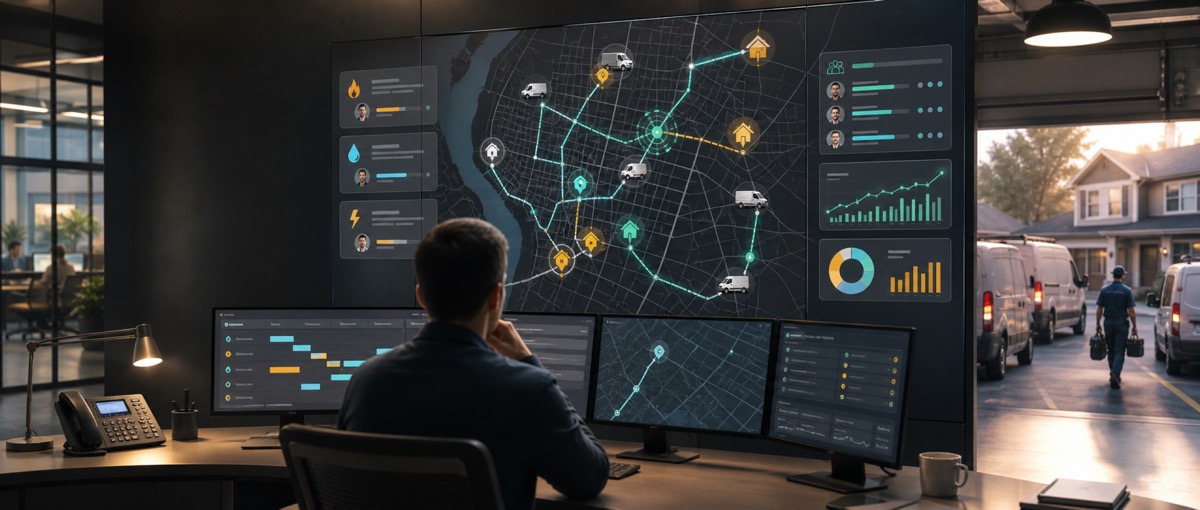
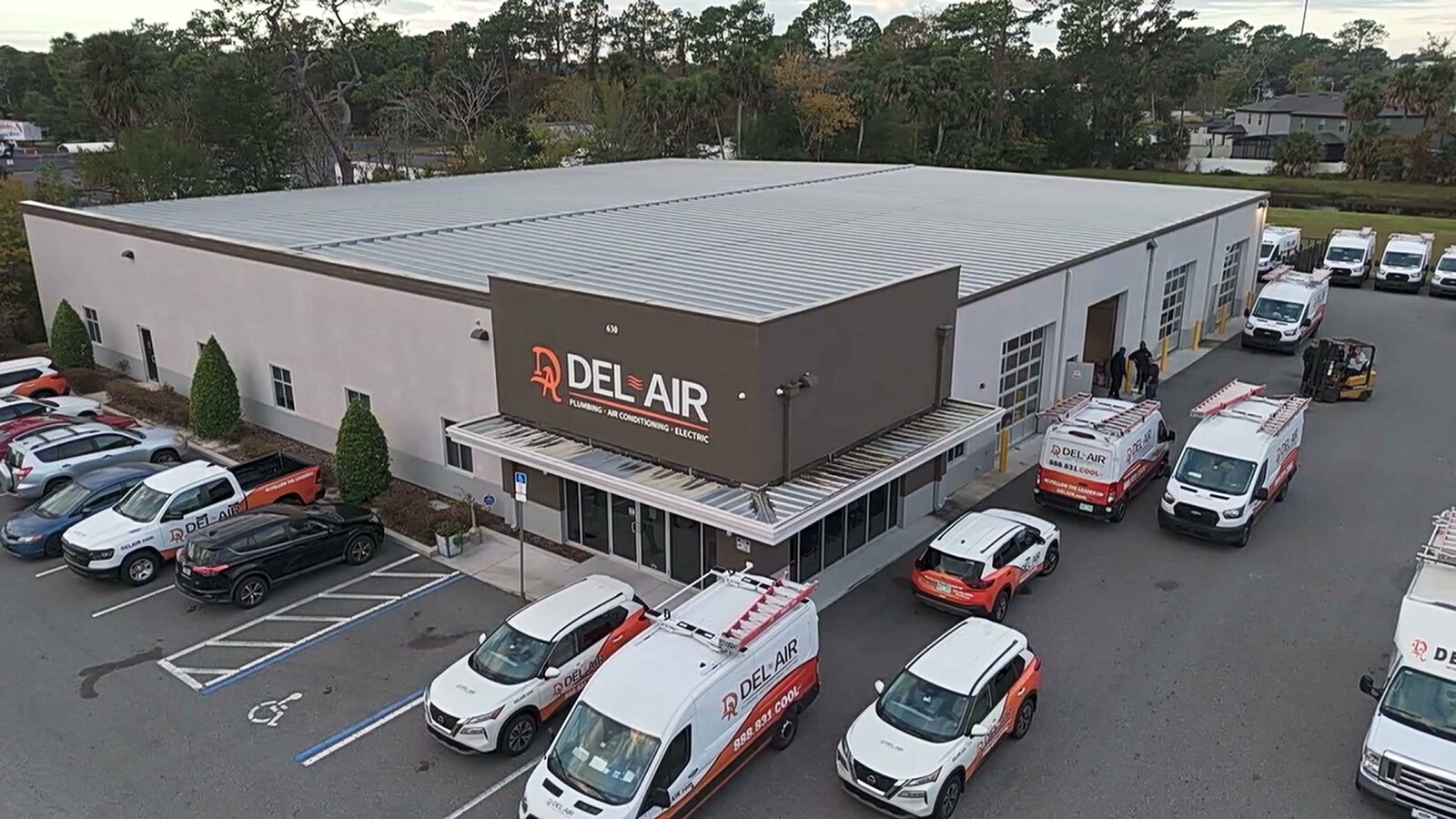
 Source: public customer-results video poster from Probook. It illustrates the home-services operations setting, not third-party performance evidence.
When AI enters home services, the most visible entry points are answering calls, writing text messages, and chasing leads. Probook made a more interesting choice: it starts with dispatch.
The company raised $40 million in June 2026, with its Series A led by a16z and seed round led by Sequoia. According to Forbes, Probook launched in 2024 and already serves hundreds of customers across more than 35 U.S. states, including independent service providers, multi-location brands, and private-equity-backed home-services platforms.
It is not simply another AI front desk.
Probook’s website defines the company as an AI operating system for home services and says “dispatch makes or breaks the customer experience.” Behind that line is a product judgment AI founders should notice: the most valuable vertical AI entry point is often not the easiest chat demo. It is the core decision that changes revenue, capacity, and service quality.
In Home Services, the Operating System Is the Dispatch Board
Home services sounds traditional, but operational complexity is high.
An HVAC, plumbing, electrical, or repair company has to manage calls, website leads, quotes, cancellations, reschedules, technician routes, skill matching, ETA messages, and follow-up. Each step looks like a place for an AI tool: one voice agent for calls, one chatbot for questions, one SMS tool for follow-up, one scheduler for routing.
The problem is that those tools can become new fragments.
In an open letter, founder George Eliadis writes that home-service operators bought a wave of AI tools over the last few years: voice agents, chat widgets, and follow-up bots. The result, in his framing, was five new tools and three new vendors. Bills increased faster than revenue, customer experience did not improve, and manual quality control kept piling up.
Probook’s entry point is to pull the fragments back to one core object: dispatch.
Dispatch is not simply “send the nearest person.” A service company must decide whether the customer is high-value, whether the job is urgent repair or a replacement opportunity, which technician has the right skill, which technician is more likely to turn the visit into a higher-ticket job, and how to route the day without lateness or wasted capacity.
a16z’s investment note states the logic plainly: in home services, dispatch is the brain of the business. It determines which technician goes to which job, in what order, and at what time. If done well, revenue, technician utilization, and customer experience all improve. If done poorly, more marketing leads cannot fix the problem.
That is Probook’s product center.
It starts with dispatch, then expands outward. Calls and web leads enter the same context. Jobs are cleaned before they reach the board. Customers communicate through one number. AI handles much of the routine communication, while humans handle exceptions. AI is not sitting outside the workflow answering questions. It is updating and using the same operational context.
Deciding Who Goes Where Is More Valuable Than Answering the Phone
Many AI founders start with the most obvious labor cost: support is busy, so build AI support; sales is busy, so build AI sales; the front desk misses calls, so build an AI front desk.
That can work, but the ceiling depends on whether the replaced task is high-value.
Probook shows another path: find the apparently ordinary decision that quietly controls profit. Dispatch in home services is exactly that. It is not a beautiful chat window, but it determines how many jobs a day can be completed, whether technicians idle, whether customers receive service on time, and whether the right person reaches the right opportunity.
According to Probook’s website customer-results pages, Del-Air is an eight-location operation with 220 service technicians, more than 15,000 monthly calls handled by Probook as first-line CSR, and a dispatcher count that moved from 22 to 10. A case for Anthony Plumbing, Heating, Cooling & Electric says average ticket value rose 20% and dispatchers moved from 16 to eight. These figures come from Probook’s website and are official case data, not independently audited performance evidence.
Even as company disclosure, those examples show the product direction. Probook is not only selling “hire fewer people.” It is selling “make the same technicians and leads create more effective revenue.”
That puts the product in a better budget category.
An AI phone tool may be compared with outsourced support, agent wages, and answer rates. A dispatch operating system can be compared with gross margin, technician utilization, average ticket, cancellation rate, repeat purchase, and EBITDA. Once the budget language changes, the commercial ceiling changes with it.
That is why Probook’s narrative repeatedly references adding points to EBITDA. It wants to be purchased as operating leverage, not as an AI plug-in.
Why It Looks Like a Vertical OS, Not an Agent Bundle
Many AI products now call themselves operating systems. Often that only means several agents in one interface.
Probook offers a stricter definition: an operating system is organized around a core business object and lets multiple actions share the same context.
For Probook, that object is dispatch and job context.
When a phone call enters the system, it is not merely transcribed or answered. It flows into dispatch, cleaning, confirmation, reminders, and tracking. The customer does not repeat information across multiple channels. The technician is not a static resource. The technician has skills, location, conversion ability, availability, and historical performance.
The difficulty is not only the model. It is field complexity.
In the public letter, Probook’s founder says the team spent time onsite with customers, configuring product beside frontline teams and even stepping in as dispatchers or AI CSRs when needed. That may sound insufficiently SaaS-like, but it is common in vertical AI. The team has to absorb dirty industry workflows before it can abstract them into product.
That also explains why Sequoia and a16z emphasize founder-market fit. Sequoia’s investment article describes Probook as automation from office to field. a16z emphasizes that the company started with hard dispatch work before expanding into intake, data scrubbing, customer messaging, and outbound.
In other words, Probook’s agents are not sold separately. They are placed inside an industry operating system serving one business goal.
Three Reminders for AI Founders
First, do not chase only the easiest AI interface to demo.
Calls, chat, and email are easy to understand and useful entry points. But the payment depth often sits in a later operational decision. Probook does not stop at “answer the call.” It asks: after the call, who goes, when do they go, how do we avoid technician waste, and how do we distinguish low-value jobs from high-value opportunities?
Second, a vertical AI operating system needs a central object.
If a product says it is an OS but has no stable business object, it can become a bundle of agents that larger platforms copy. Probook has a clear center: the dispatch board and job context. Calls, job cleaning, technician matching, ETA communication, and outbound all rotate around it.
Third, the sales story should move from efficiency to operating results.
“Save time” is the most common AI selling point, and also one of the easiest to price down. Probook is more interesting because it anchors value in dispatcher leverage, technician capacity, average ticket, and EBITDA. The website case metrics still need cautious labeling, but the metric choice itself shows the budget tier the company wants to enter.
The Risks Are Clear
Probook still faces real challenges.
ServiceTitan and other home-services software incumbents already have large customer bases and are adding AI dispatch capabilities. Fortune also noted that Probook is currently listed as a ServiceTitan partner, but the long-term boundary may not remain complementary.
The company’s public customer results also come largely from its website, founder letter, or investor articles. They are commercial signals, not independently audited evidence.
Finally, “AI operating system” will become a crowded phrase. Every vertical AI company may use it. The real difference is not the name. It is whether the product owns the most important and hardest-to-replace work object in the industry.
Probook’s answer is dispatch.
For AI founders, the value of this case is not that home services can use AI. It is a reminder to ask not only where repetitive labor exists, but where a high-leverage decision sits.
Repetitive labor determines whether customers will try the product.
High-leverage decisions determine whether customers will let the product run the business.