
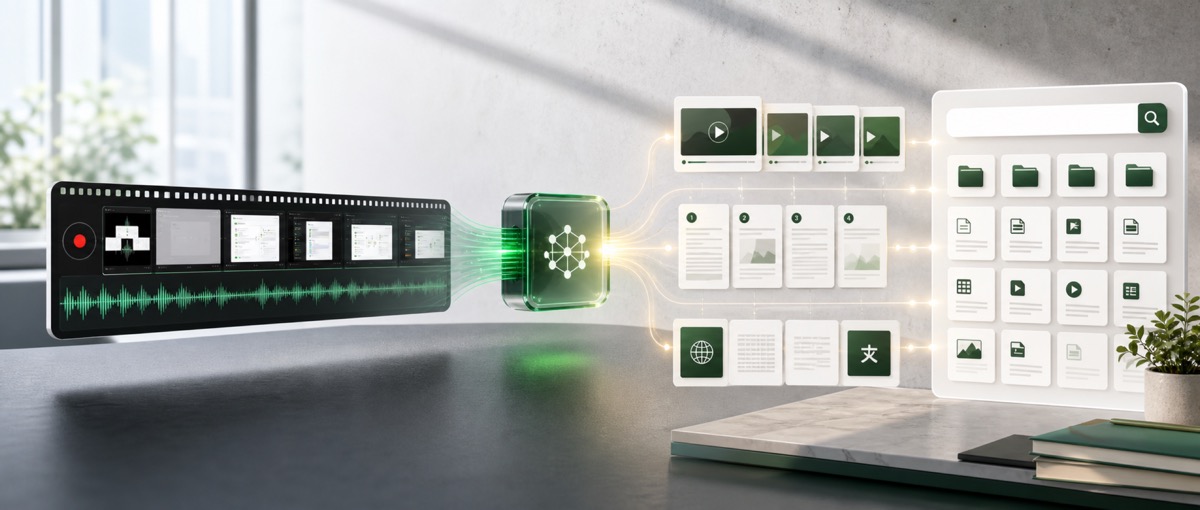
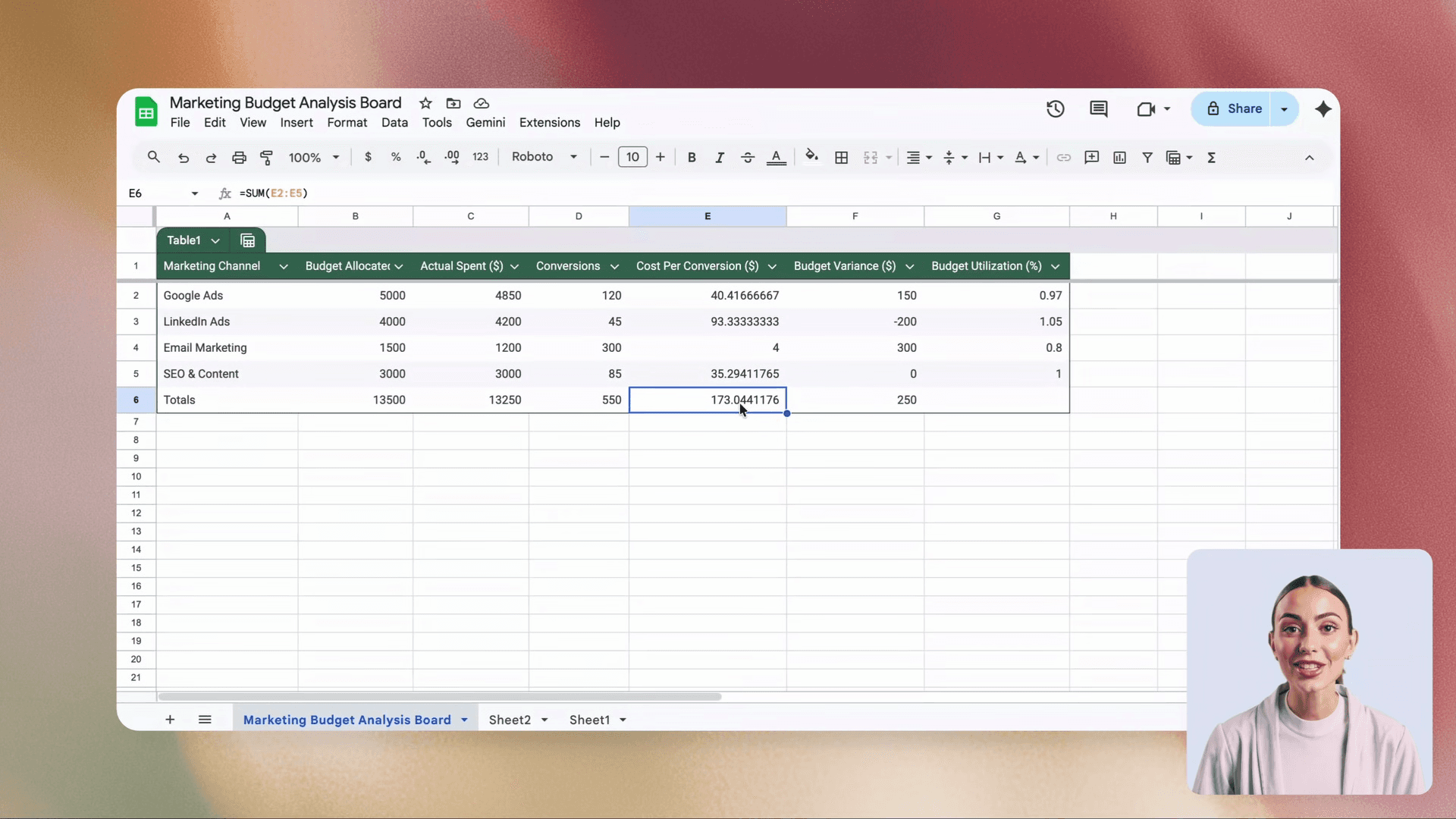
Image source: Trupeer website hero poster. Official promotional material, useful for understanding the product experience but not audited third-party evidence.
Trupeer does not only sell videos. It sells reusable work knowledge.
At first glance, Trupeer looks like another AI video tool. That is not the most interesting way to read it. The stronger angle is that Trupeer starts from a simple workplace input, screen recording, and turns it into multiple assets: videos, step-by-step guides, voiceover, subtitles, translations, branded pages, and a searchable knowledge base.
The product is really attacking a common organizational problem. Someone knows how to do something. Someone else needs to learn it. The knowledge is stuck in a meeting recording, a Slack explanation, an old document, a support reply, or a person’s memory.
The hard part is not creating one pretty video. The hard part is turning messy operational know-how into assets that can be reused by customer success, support, training, sales engineering, product marketing, and internal teams.
That is why Trupeer is a useful AI product case.
The Input Is Cheap
Many AI products ask users to learn a new behavior. They require a precise prompt, a structured upload, or a workflow configuration before the user gets value.
Trupeer lowers the input burden. The user records the screen.
That matters because screen recording is not a new behavior. Loom, Zoom, product walkthroughs, customer-support debugging, training demos, and remote work have already taught teams how to record the screen. Trupeer does not have to invent the habit. It only has to improve the output.
This is a repeatable product lesson. AI tools often work better when they begin with an action the user already understands: record a screen, take a screenshot, forward an email, upload a spreadsheet, join a meeting, or take a photo.
Old input, new output is usually easier to adopt than new input, new output.
The Output Is Not One File
If Trupeer only generated a video, it would be easy to compare it with editing tools, screen recorders, or AI video models.
The product’s stronger move is that one recording can become many work assets. It can become a polished video, a script, voiceover, captions, a guide, translated content, branded templates, a shareable page, and a knowledge-base entry.
For customer-success teams, product trainers, support teams, and sales engineers, that means the product is not just saving one editing session. It can reduce the work of maintaining an entire content pipeline.
This is where the commercialization logic improves. A one-off video generator is a tool. A system that turns a recurring input into multiple reusable outputs can become part of team operations.
The Knowledge Base Changes the Category
Trupeer’s positioning as a workflow knowledge layer is important. It moves the product away from pure AI video creation and toward knowledge operations.
When generated content enters a knowledge base, the product is no longer only producing an asset. It is capturing the team’s operational memory. The more recordings, guides, templates, translations, and support walkthroughs a team creates, the more valuable search and reuse become.
That creates a path from individual use to team subscription.
A person may start by recording one workflow. A team may later care about brand templates, roles, permissions, analytics, custom domains, SSO, AI search, and reusable knowledge collections. Those are better enterprise expansion hooks than “make another video.”
The lesson for founders is that AI generation alone rarely creates durable retention. The generated output has to become an asset that makes the second and third use easier than the first.
Public Signals
Economic Times reported that Trupeer raised a $3 million seed round in 2025, led by RTP Global with participation from Salesforce Ventures and others. The same report said the company served 10,000 teams globally.
Trupeer’s website also uses broader trust language, including references to Fortune 500 usage. Those are official company claims and should be treated as marketing evidence unless supported by independent reporting.
The pricing page is more useful for understanding the business model. Trupeer offers Free, Pro, Scale, Enterprise, and a Knowledge Base add-on. That packaging shows the product is not only charging for a single generation event. It is pricing around usage, team capabilities, enterprise controls, and knowledge management.
That is the commercially important part. The company can start with video creation and expand into a system of record for workflow knowledge.
Where the Moat Could Be
The model capabilities behind Trupeer are not the long-term moat. Screen-to-script, voiceover, captions, and translation will become widely available.
The moat has to come from workflow packaging.
If Trupeer can make recording, action detection, screenshot extraction, step generation, video packaging, branding, collaboration, translation, sharing, analytics, knowledge-base organization, and AI search feel like one continuous workflow, the product is selling a saved operating process rather than a model feature.
The inventory of content also matters. Once a company has many guides, localized versions, branded templates, and customer-facing walkthroughs inside a system, the switching cost begins to rise. That is when a lightweight creator tool starts to look more like infrastructure for customer education and internal enablement.
What Builders Can Copy
First, choose an input that users already know how to create. Screen recordings, screenshots, emails, spreadsheets, meeting transcripts, and photos can all become AI product entry points because they do not require heavy behavior change.
Second, turn one input into multiple outputs. Do not stop at “AI can generate a thing.” Ask what other assets the same source material can become. Trupeer turns a recording into video, guide, translation, brand page, and knowledge-base content. Similar patterns exist in sales, legal, support, finance, healthcare administration, and field operations.
Third, make repeat use cheaper. Retention comes from reuse. Templates, brand rules, voices, team knowledge bases, historical assets, search indexes, and analytics all make the second use easier. If every AI product session feels like a first session, the product will struggle to become a habit.
What Is Hard To Copy
Trupeer benefits from timing. AI video, AI voice, automatic documentation, translation, and knowledge-base search all matured around the same market window. Remote work, customer self-service, and software training also made teams more comfortable with screen-recorded knowledge.
But timing is not the whole story.
The stronger product move is reframing content creation as knowledge delivery. That helps Trupeer avoid the most crowded part of AI video and enter budgets tied to customer success, training, pre-sales, support, and enterprise knowledge management.
That framing is much more durable than “make a prettier video.”
Conclusion
Trupeer’s lesson is that AI founders should not only look at the generated result.
A better question is: what rough material does the user already have, how many work assets can it become, and can those assets accumulate value over time?
If the answer is yes, the product has a path beyond one-off generation. It can become a system that captures and reuses work knowledge.
That is where a modest screen recording can become a real AI business.
Sources
- Trupeer website: https://www.trupeer.ai/
- Trupeer pricing page: https://www.trupeer.ai/pricing
- Economic Times coverage: https://economictimes.indiatimes.com/tech/funding/video-platform-trupeer-ai-raises-3-million-by-rtp-global-others/articleshow/122513298.cms